A brand that revolutionised modern music
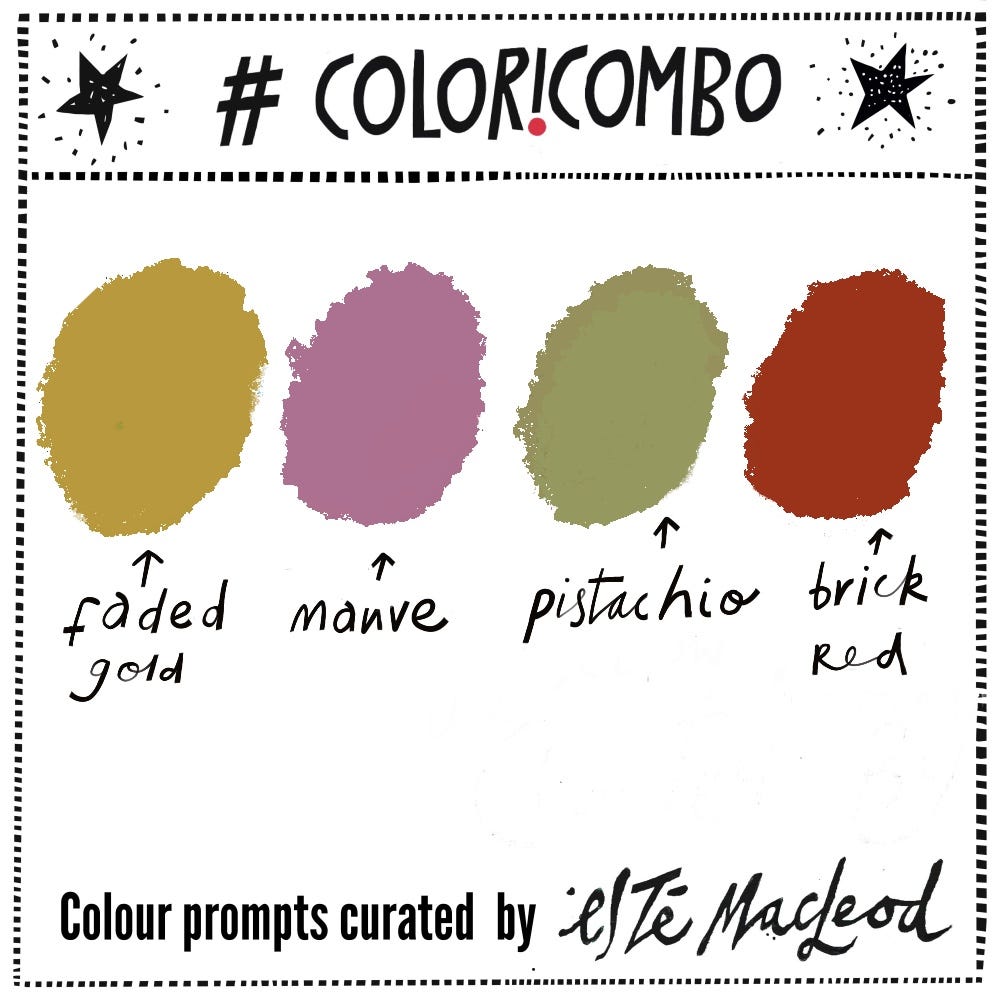
Week Thirty Two is Faded Gold, Mauve, Pistachio & Brick Red
There’s 20% off my online courses (use code AUGUST20 at checkout) and off scarfs and giclée prints (automatic) until 20 August. I’ve also just announced a brand new course Print, Paint & Pattern where I’m exploring layering with gel plates. It runs 14 September to 4 October and you can get more information here.
Do you know about MapTap? It’s an online geography quiz where you have to guess where five random places are on the globe and once you’ve done that you’re rewarded with a story or some interesting historical fact about the location. It’s right up the street of my curious mind.
I also have a book of days that lists anniversaries, historical events and people who were born or died on specific dates. As it happens, Leo Fender was highlighted in both MapTap and my book of days as 10 August is his birthday which he shares with my lovely husband, business partner and general sidekick, Niall!
Even for someone unfamiliar with guitars (i.e. me), the brand Fender is one that’s immediately recognisable. Founded by Clarence Leonidas Fender in Fullerton, California in 1946, they started out repairing amplifiers and lap steel guitars before deciding to cater for a louder clientele: guitarists in dance bands.
When musicians complained to him about feedback coming through their amplifiers, Fender looked at the issue from a different angle and in 1950 came up with a solution, the Fender Telecaster, credited as the first mass-produced, solid-body electric guitar. It was a simple, ergonomic design made from a single slab of wood with a separate bolt-on neck and two pickups that made it easy to manufacture and famously durable.
By 1965, Fender was bought by CBS (Columbia Broadcasting System) and in 1968 the pink paisley Telecaster featured in this week’s prompt was released, aimed squarely at guitarists inspired by the Summer of Love. Not much effort had gone into the pattern - it came from a neighbouring wallpaper store in Fullerton. A roll of Cling-Foil wallpaper was cut and stuck directly onto the body of a Telecaster then sealed under a clear coat. Simple!
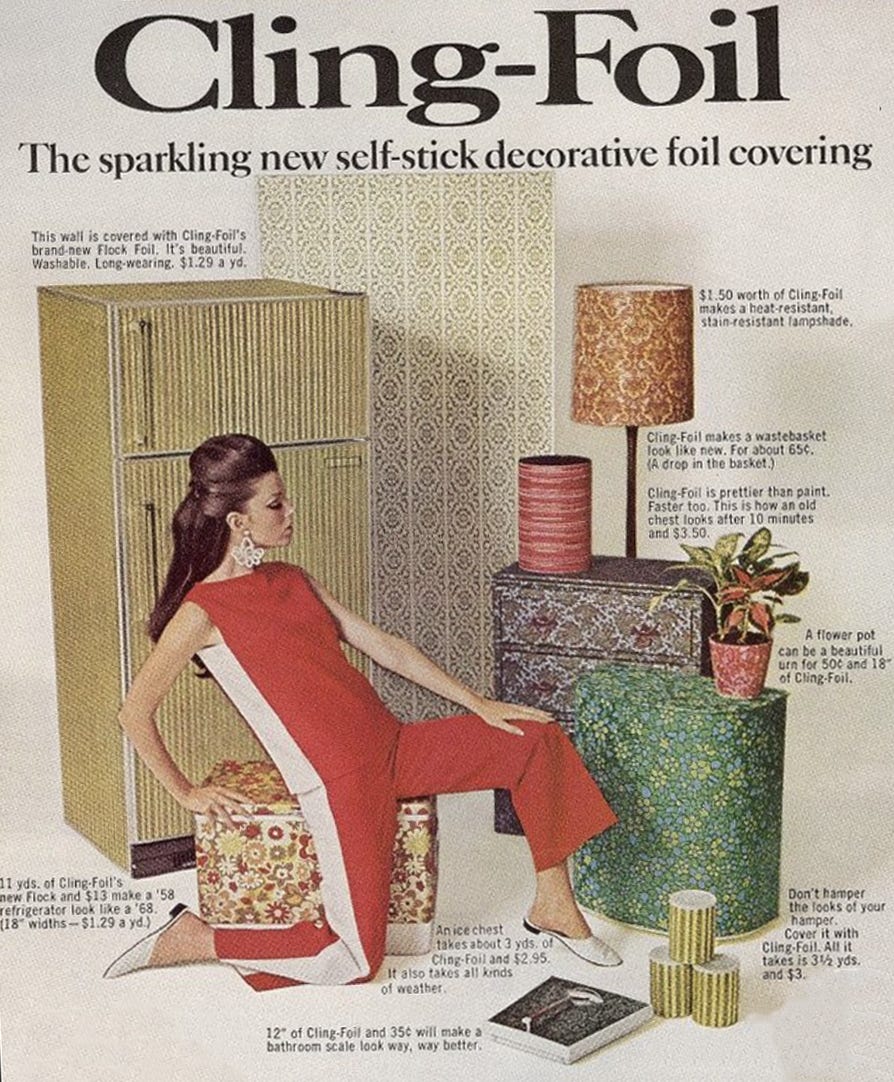
Described in Fender’s 1968 catalogue as paisley red, it was prone to fading and only lasted two years of production. Only a few hundred guitars were produced with the metallic wallpaper paisley design as decoration.
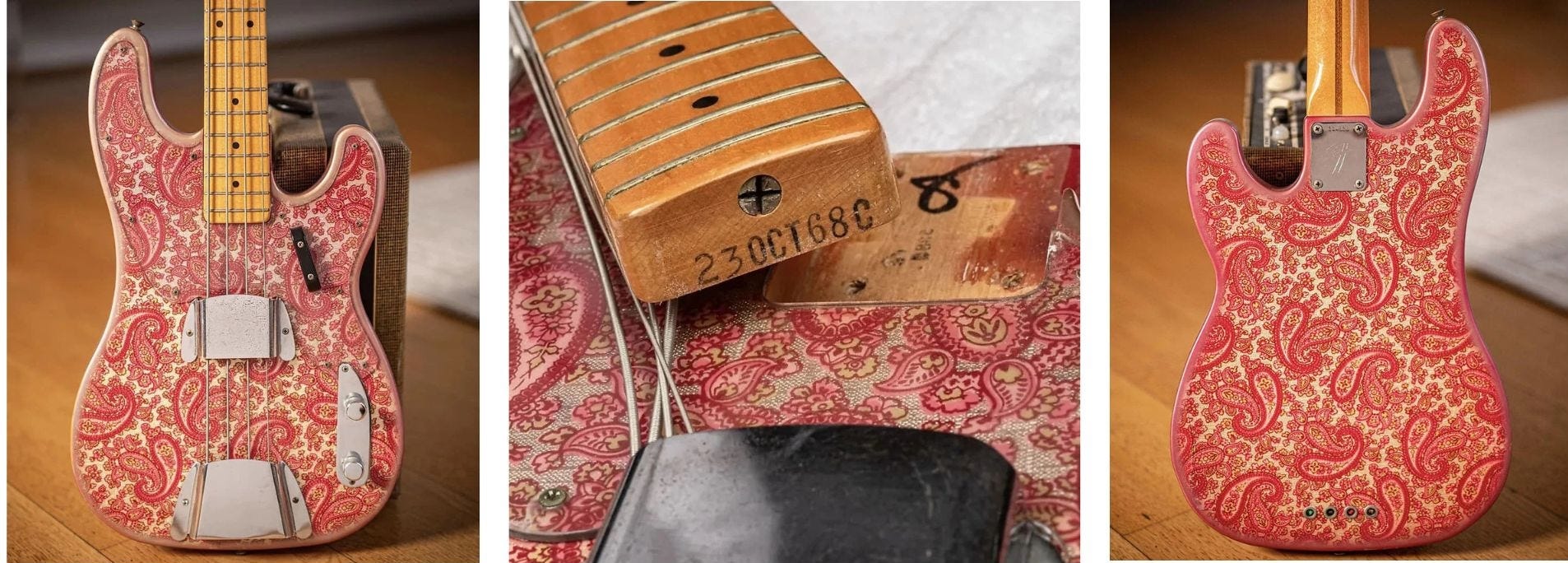
Advertised at Hank’s Denmark Street Guitars in London, priced around $17,000
Fender presented one to James Burton, Elvis Presley’s guitarist who made it something of a signature instrument and was responsible for it’s popularity, including a number of limited edition releases over the years.
Paisley patterns themselves are classic designs with a long history. It originates in Kashmir, India but was appropriated by British colonialist and named after a town in Scotland. But that’s a story for another day.
Read more about the guitar here and watch an interview with the American country musician Brad Paisley, who of course plays a paisley pink, on the Fender website here.
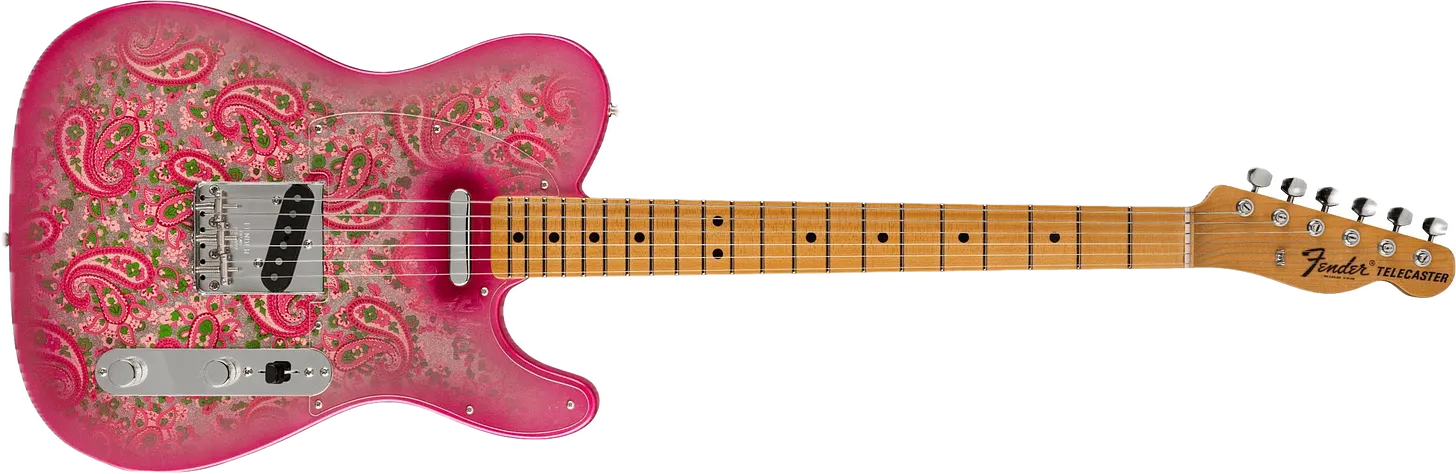
“Fender Paisley Pink Telecaster”, Fender Guitars, 1968
Colour Combination
The colours this week are Faded Gold, Mauve, Pistachio & Brick Red. Use them along with a contrasting dark and neutral light colour to create an artwork in any medium or style. Know someone who might enjoy a weekly dollop of colour and creativity? Why not share this post with them?
Shapes
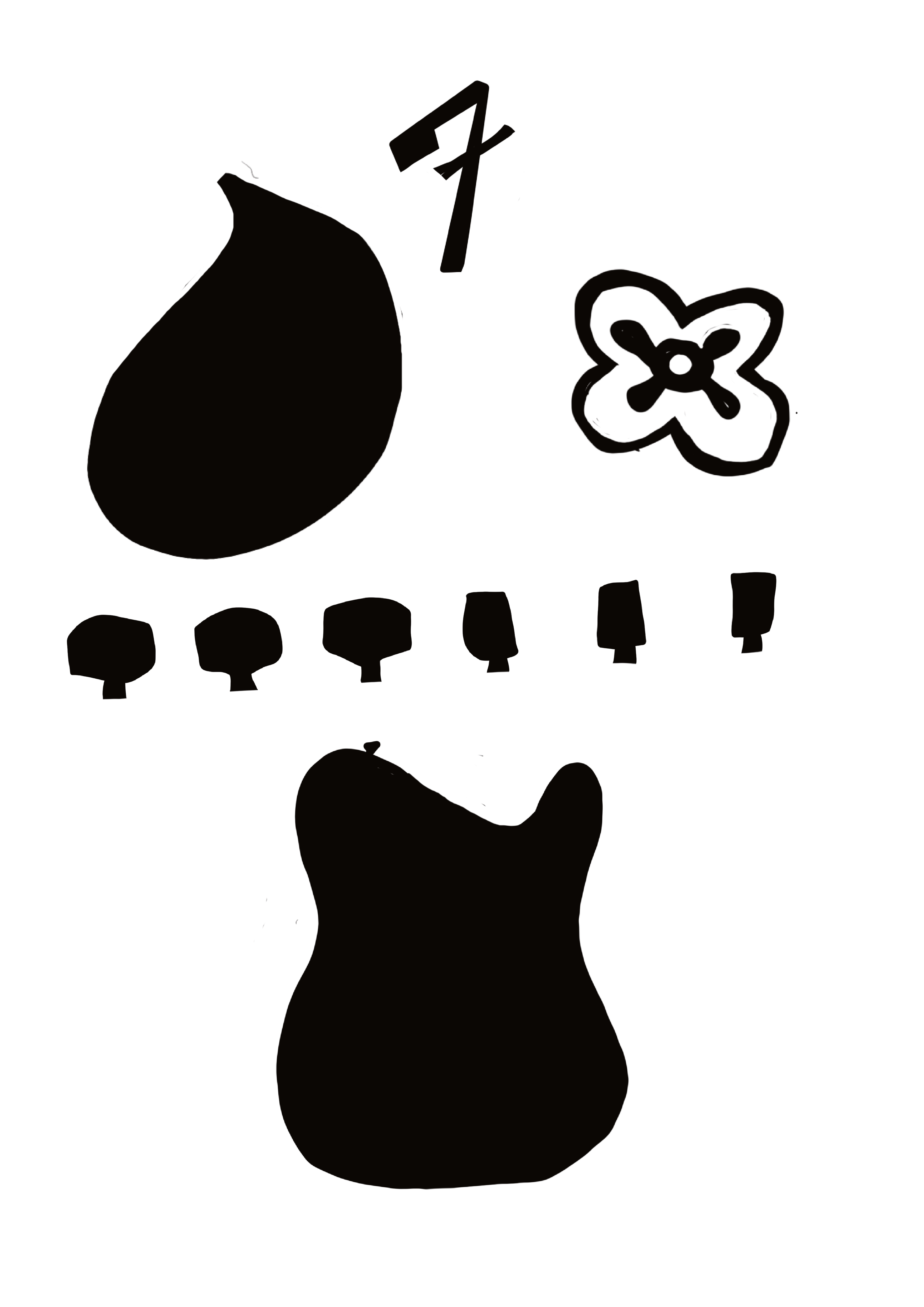
Along with the colour prompt I am including some shapes inspired by the artwork which you can download as a PDF and print out to use as you wish