

A rather bizarre plant that smells of death
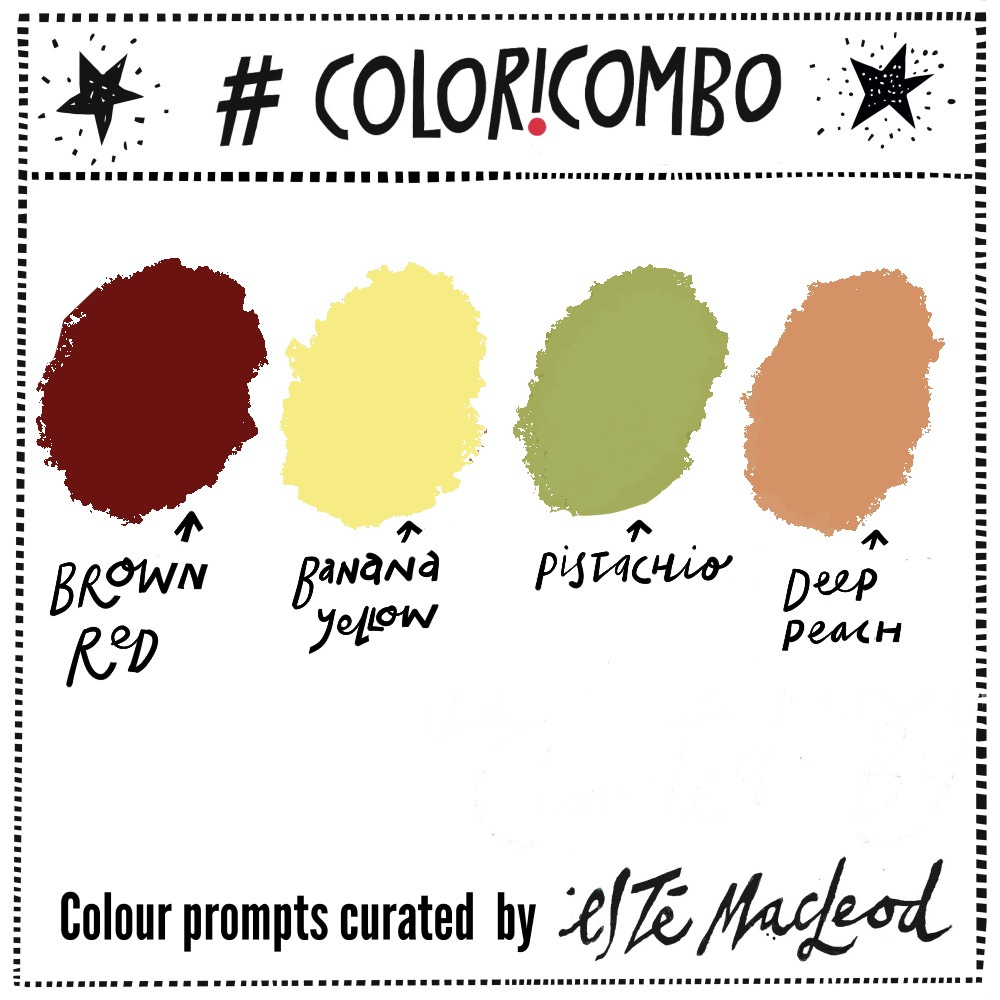
Week Eighteen is Brown Red, Banana Yellow, Pistachio & Deep Peach

The Colori Flori Summit 2026 is now open for registration with a 20% Early Bird discount available until the first lesson is released. Dates are 18-31 May, find out all the details here.
If, like me, you avoided world affairs last week, there were a number of other interesting articles in the news including two irregular occurances.
The first was that the month of May has two full moons, the Flower Moon on the 1st and a rare Blue Moon on the 31st. Both of them were also micromoons (the opposite of a supermoon) where the moon appears smaller to us as it’s at it’s furthest point from Earth. This phenomenon happens only once every two and a half to three years, the next Blue Moon is in December 2028.
Also in recent news was the announcement from Kew Gardens in London that their titan arum was officially in bloom, one of the rarest moments in the plant world.
The titan arum is also unkindly known as the corpse flower or scientifically Amorphophallus titanum, which roughly translates as “giant misshapen phallus”.
Hailing from Sumatra, it’s the world’s largest unbranched inflorescence (where multiple flowers act as one) and can grow up to eight feet tall. It stores energy in a huge underground stem called a “corm” and can go for multiple years before blooming for only a few days.
When it does, it emits a smell likened to that of rotting meat in order to attract it’s pollinators like carrion beetles and flies. It also produces heat allowing the stench to travel further. Apparently it’s a sight and a smell that needs to be experienced!
The titan arum flowered for the first time outside of it’s native Sumatra at Kew Gardens in 1889, and when it did it was illustrated by today’s featured artist, Matilda Smith.
Smith (1854-1927) was born to an English family in India. Her second cousin, Joseph Dalton Hooker, was the director of Kew Gardens who employed her there to train as an illustrator when she was twenty three.
Interestingly, she had no artistic training and no experience in botany whatsoever but showed herself to be very skilled!
In 1878, shortly after her first drawing was published in Curtis’s Botanical Magazine, a dispute over outstanding monies between between Hooker and the magazine’s lead illustrator Walter Hood Fitch caused Fitch to leave the magazine. Smith took over responsibilities and by 1898 was appointed the first official botanical artist of Kew Gardens.
Between 1878 and 1923, Smith drew more than 2,300 plates for Curtis’s Botanical Magazine. She was especially admired for her ability to create credible illustrations from dried, flattened, and sometimes imperfect specimens and was the first artist to depict New Zealand’s flora in depth, creating 1,500 plates for the monumental Icones Plantarum.
In 1921, the year she retired, she was named an associate of the Linnean Society - only the second woman to have achieved this honour. She was also recognised by the Royal Horticultural Society and had two plant genera named in her honour. At the end of the Victorian era, Smith had changed what was possible for women in botanical science and art.
Read more about the titan arum from Kew Gardens here and follow them on Instagram here. You can read more about Smith here and here.
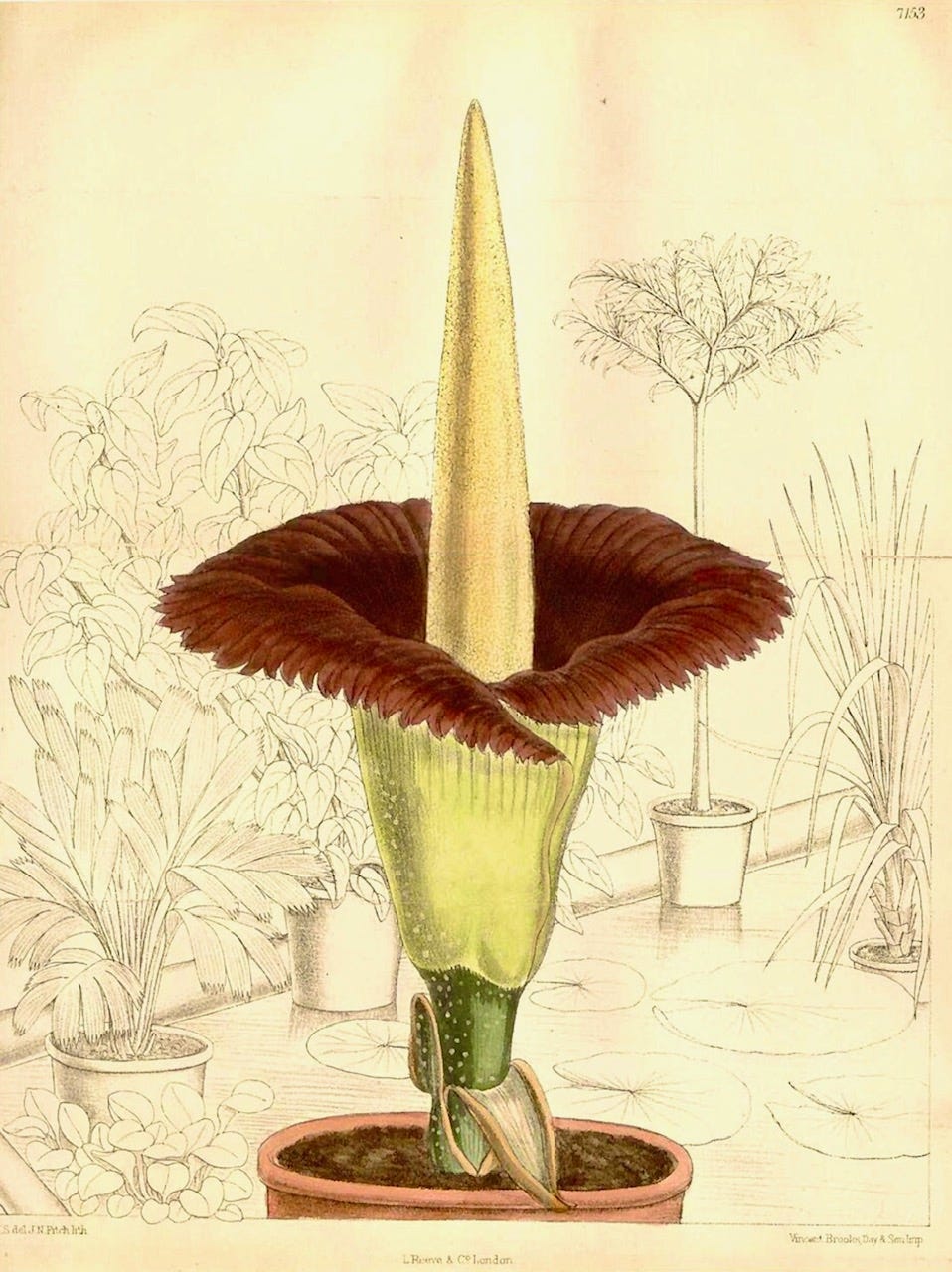
“Amorphophallus titanum”, watercolour and ink on paper, Matilda Smith, 1889
Colour Combination
The colours this week are Brown Red, Banana Yellow, Pistachio & Deep Peach. Use them along with a contrasting dark and neutral light colour to create an artwork in any medium or style. Know someone who might enjoy a weekly dollop of colour and creativity? Why not share this post with them?
Shapes
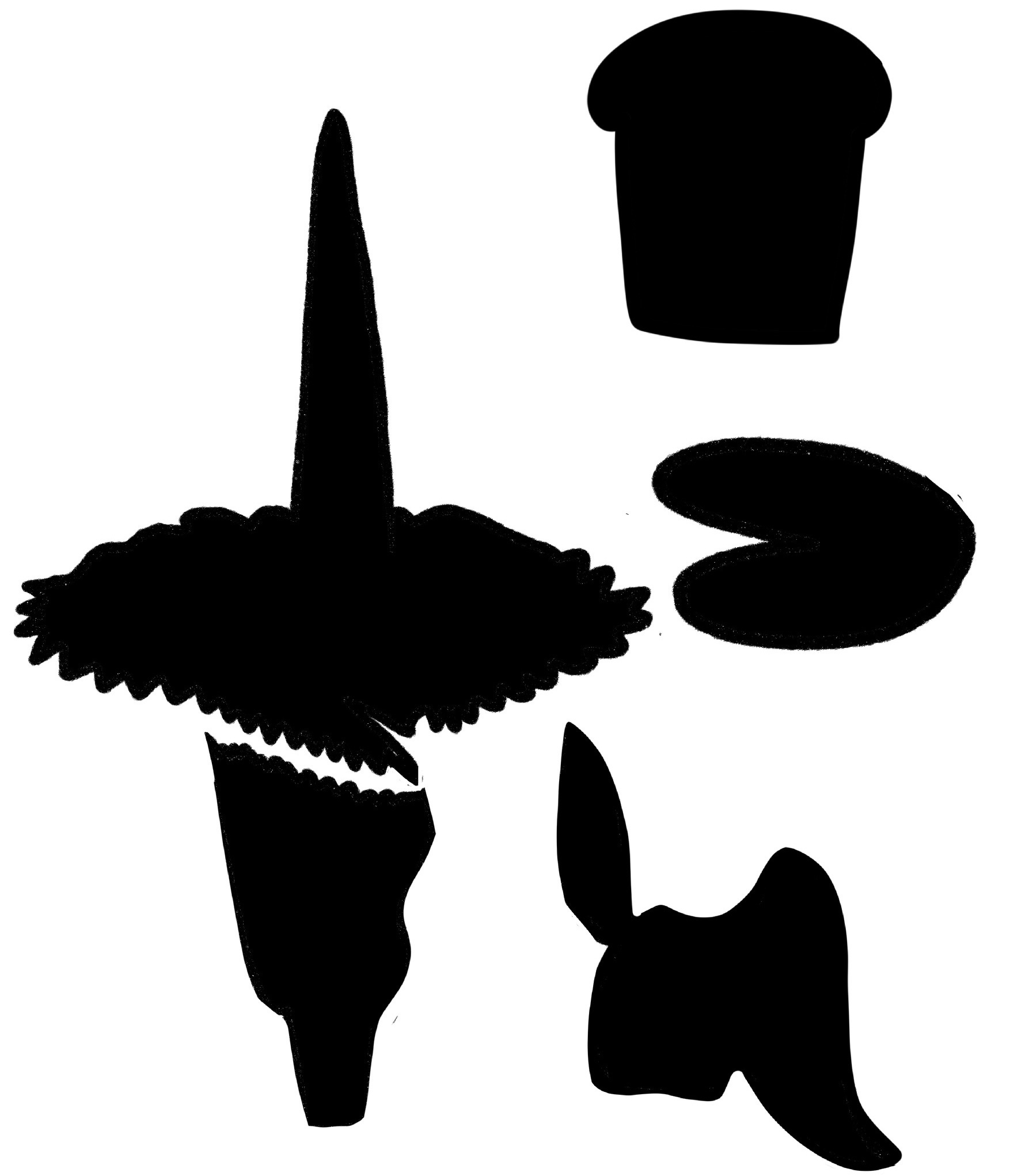
Along with the colour prompt I am including some shapes inspired by the artwork which you can download as a PDF and print out to use as you wish

wow! pretty amazing and bizarre! thanks for sharing.