

Brontëmania returns to the screens
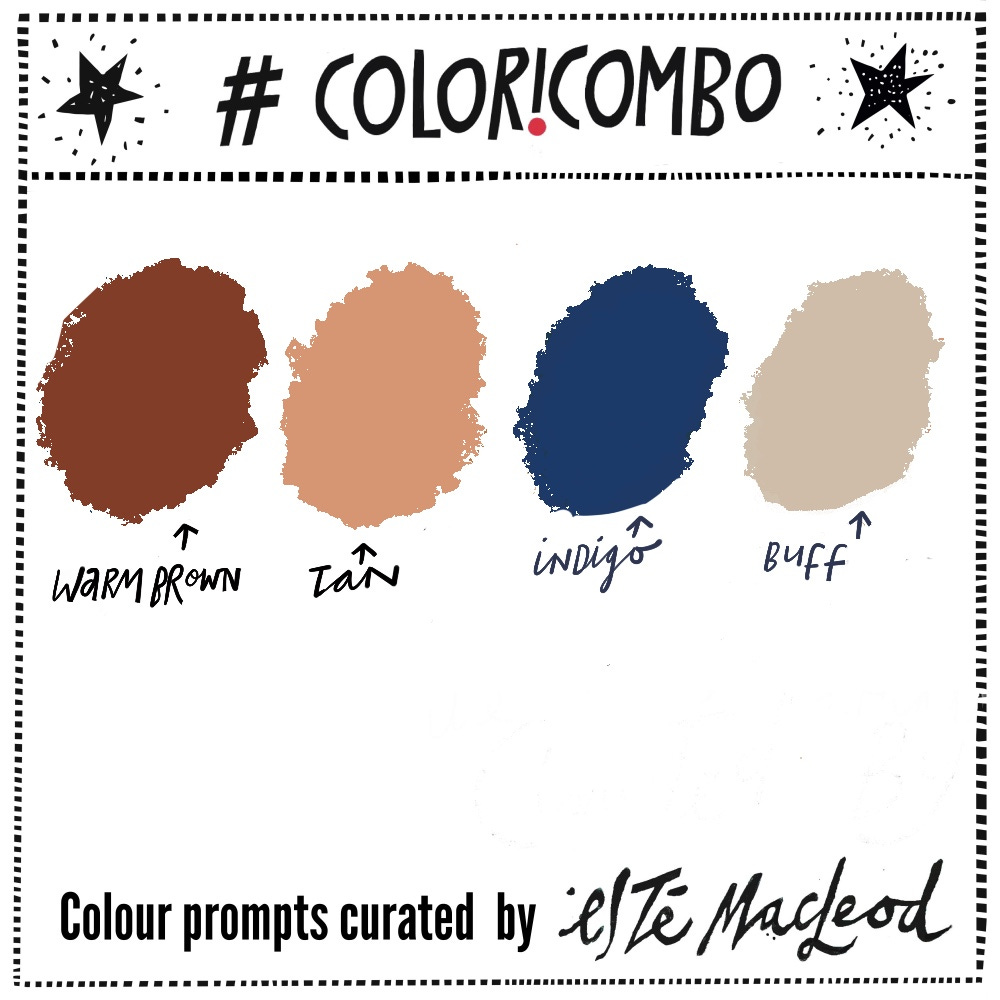
Week Eleven is Warm Brown, Tan, Indigo & Buff
Which movie received eight nominations at the 12th Academy Awards in 1940 and won in the Cinematography (Black & White) category? Here’s a hint: it was the same year as Gone with the Wind and there’s a new remake of the same movie on track for a number of 2027 nominations. Any guesses?
The answer is Wuthering Heights, the only novel written by Emily Brontë and self published in 1847.
Wuthering Heights is also the link between cinema and this week’s featured artist, Edna Clarke Hall (1879-1979) who was born in Kent, England, She was the tenth of twelve children of Benjamin Waugh, known as the founder of the British children’s charity the NSPCC.
In 1893, aged only fourteen, she was enrolled at the Slade School of Fine Art in London where she won numerous prizes and a prestigious scholarship. When her work was first accepted at the New English Art Club in 1899, it appeared alongside that of Augustus John, considered for a time the most important artist in Britain!
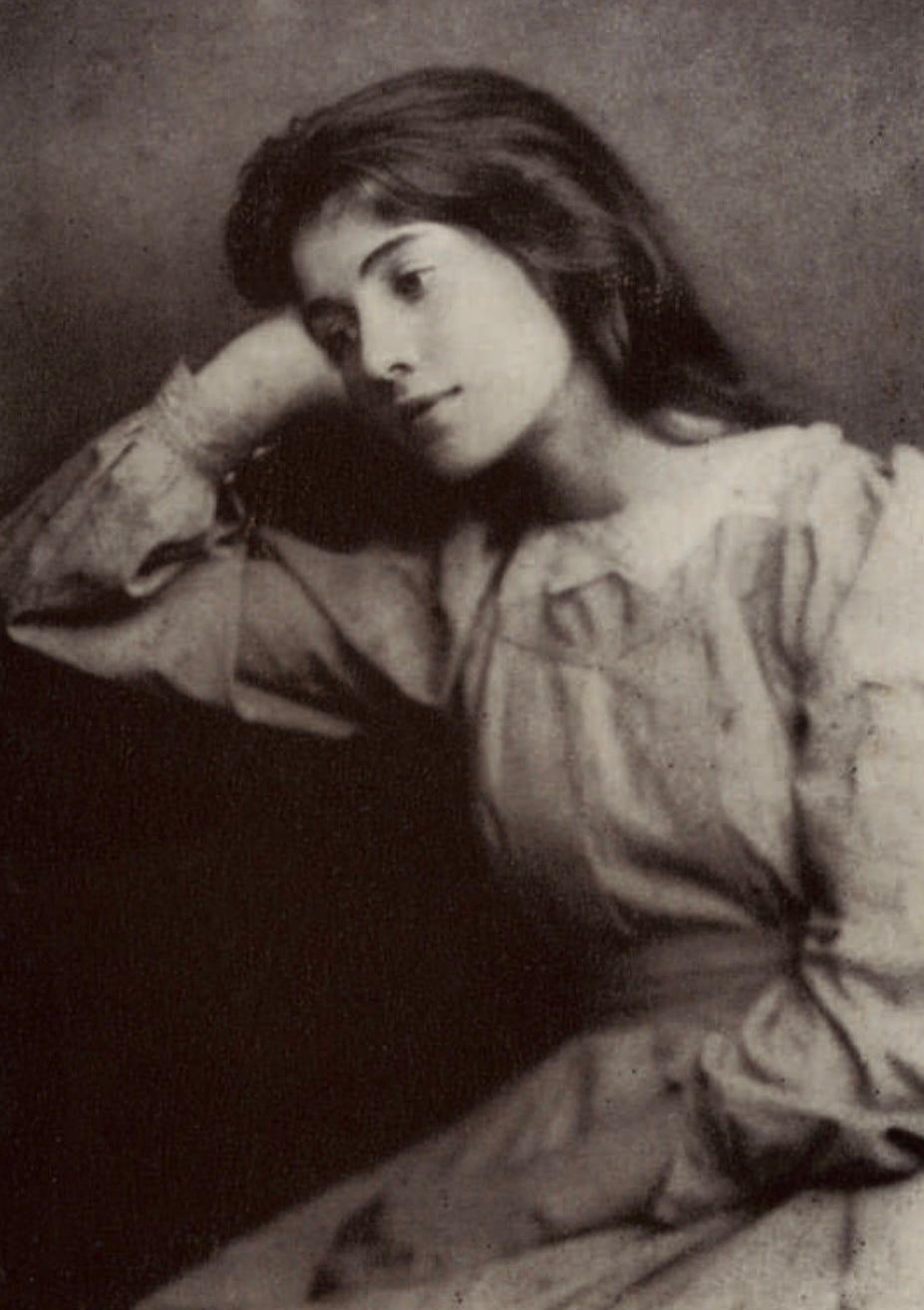
The artist photographed by Lizzie Caswall Smith in 1895
That same year she married William Clarke Hall, a barrister with traditional views of marriage and little interest in art. They moved from London to rural Essex where they rented a manor house which reminded Clarke Hall of the house described in Wuthering Heights. She saw parallels between her own life and that of Catherine, the protagonist in the book and began working in a makeshift studio, retreating into a fantasy world. She collected vintage clothing from London’s East End and overcame a lack of models by drawing herself or sometimes her sister Rosa, as both the ill-fated lovers, Catherine and Heathcliff. These works, all 247 of them, are among the most psychologically searching works in British art and sit at the juncture of self-portrait, illustration and performance.
After a nervous breakdown in 1919 she persuaded her husband to rent her a proper studio in Grey’s Inn and was able to reassert herself as an artist, taking printmaking classes at the Central School of Arts and Crafts and exhibiting regularly at the Redfern Gallery from 1924 onwards where her “Poem Paintings” were shown. Her husband was knighted in 1932 and died that same year, leaving her financially precarious but creatively liberated.
Her works began to enter public collections and a retrospective of her drawings was held in Manchester in 1939. Unfortunately her studio was destroyed in 1941 during the Blitz, a devastating blow which meant she started painting less and less, ceasing altogether in the early 1950s.
The largest collection of her work is now held by the Victoria & Albert Museum and you can read more about her and Brontë’s influence here. There’s a good profile from the Tate here and an article in the World of Interiors here that reminds us that Brontëmania isn’t new!
The watercolour I’ve taken colours from is from Clarke Hall’s later “Poem Paintings” that you can read about here.
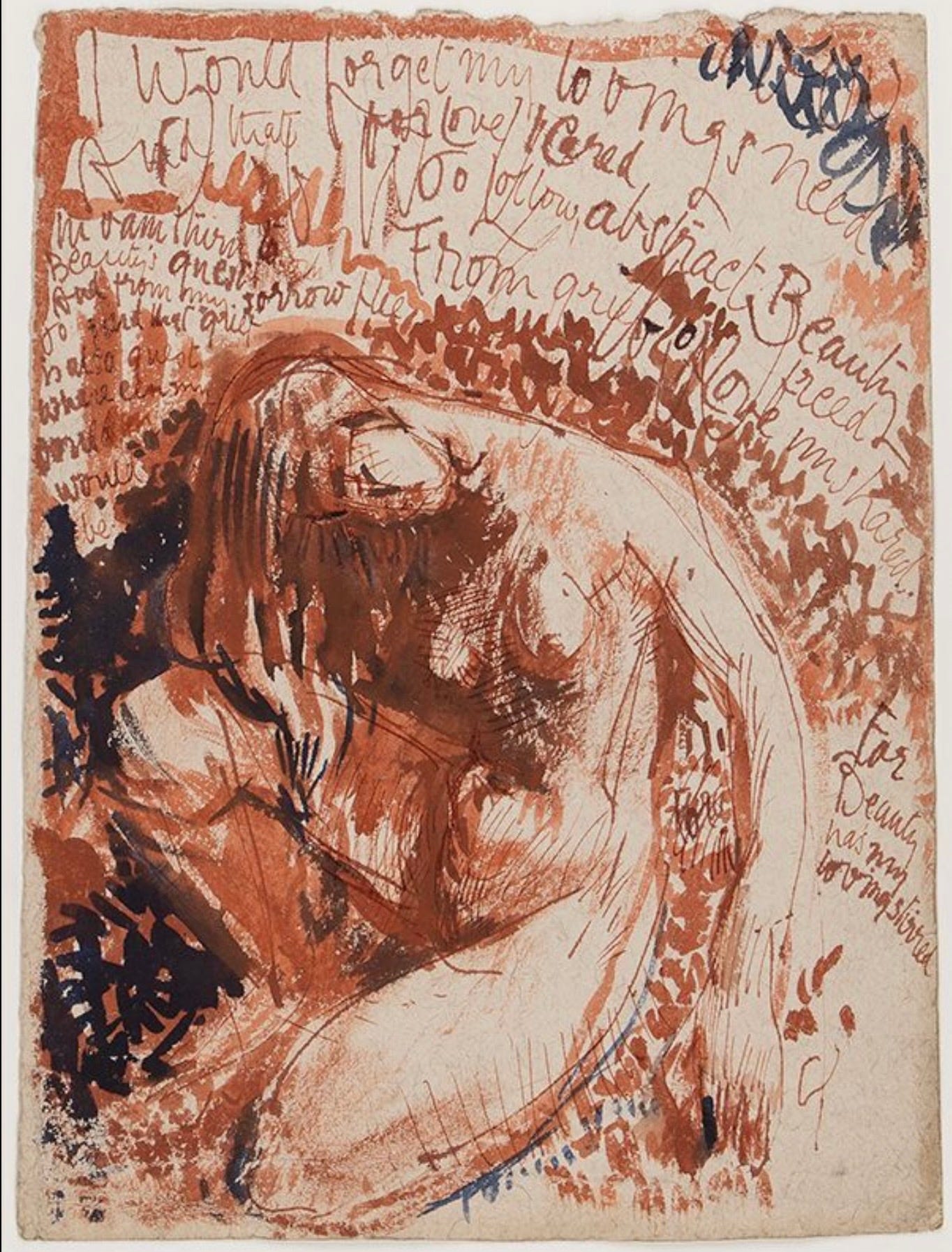
“I would forget my lovings need”, ink, watercolour and gouache, Edna Clarke Hall, ~1920s
Colour Combination
The colours this week are Warm Brown, Tan, Indigo & Buff. Use them along with a contrasting dark and neutral light colour to create an artwork in any medium or style. Know someone who might enjoy a weekly dollop of colour and creativity? Why not share this post with them?
Shapes
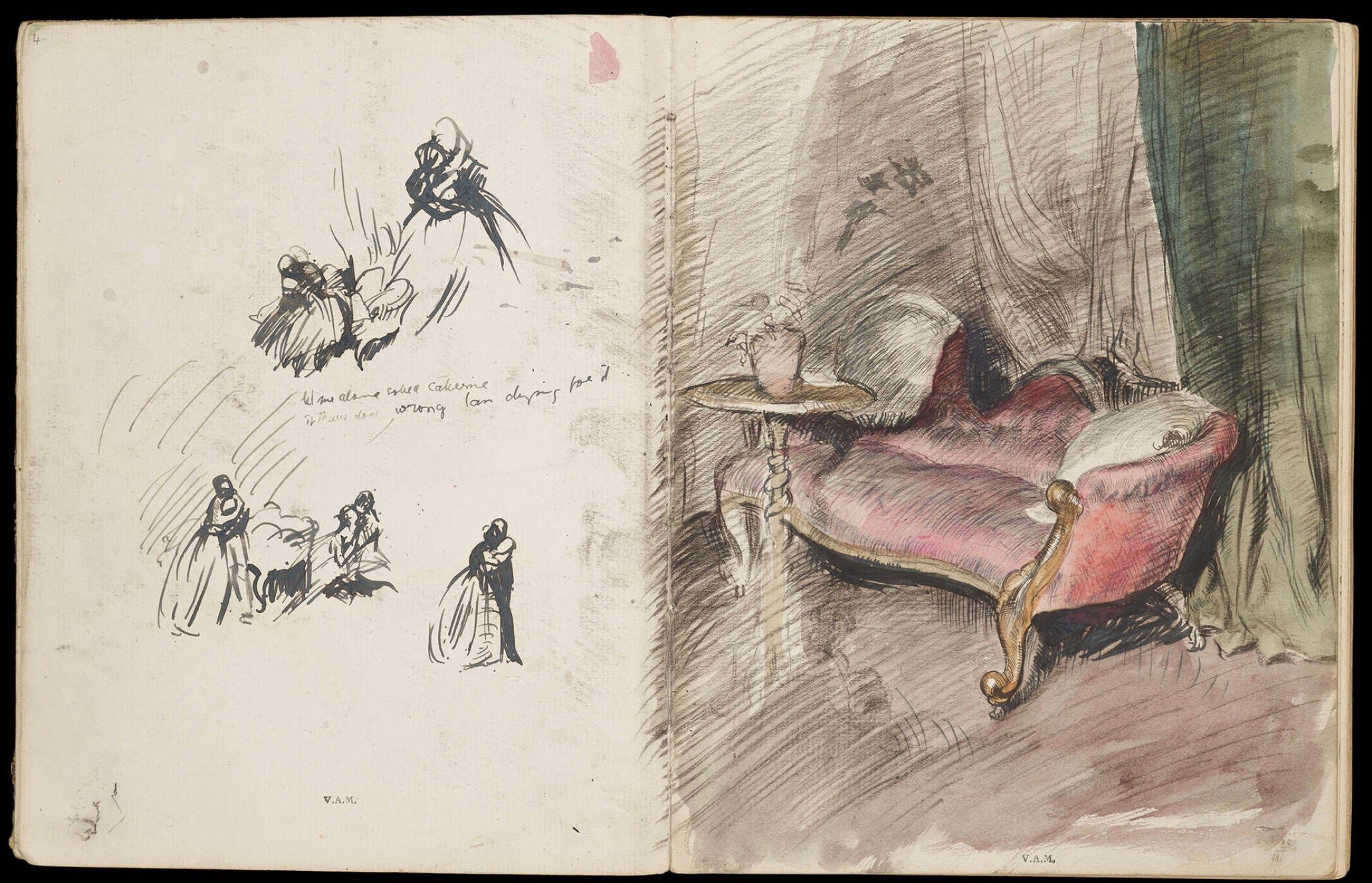
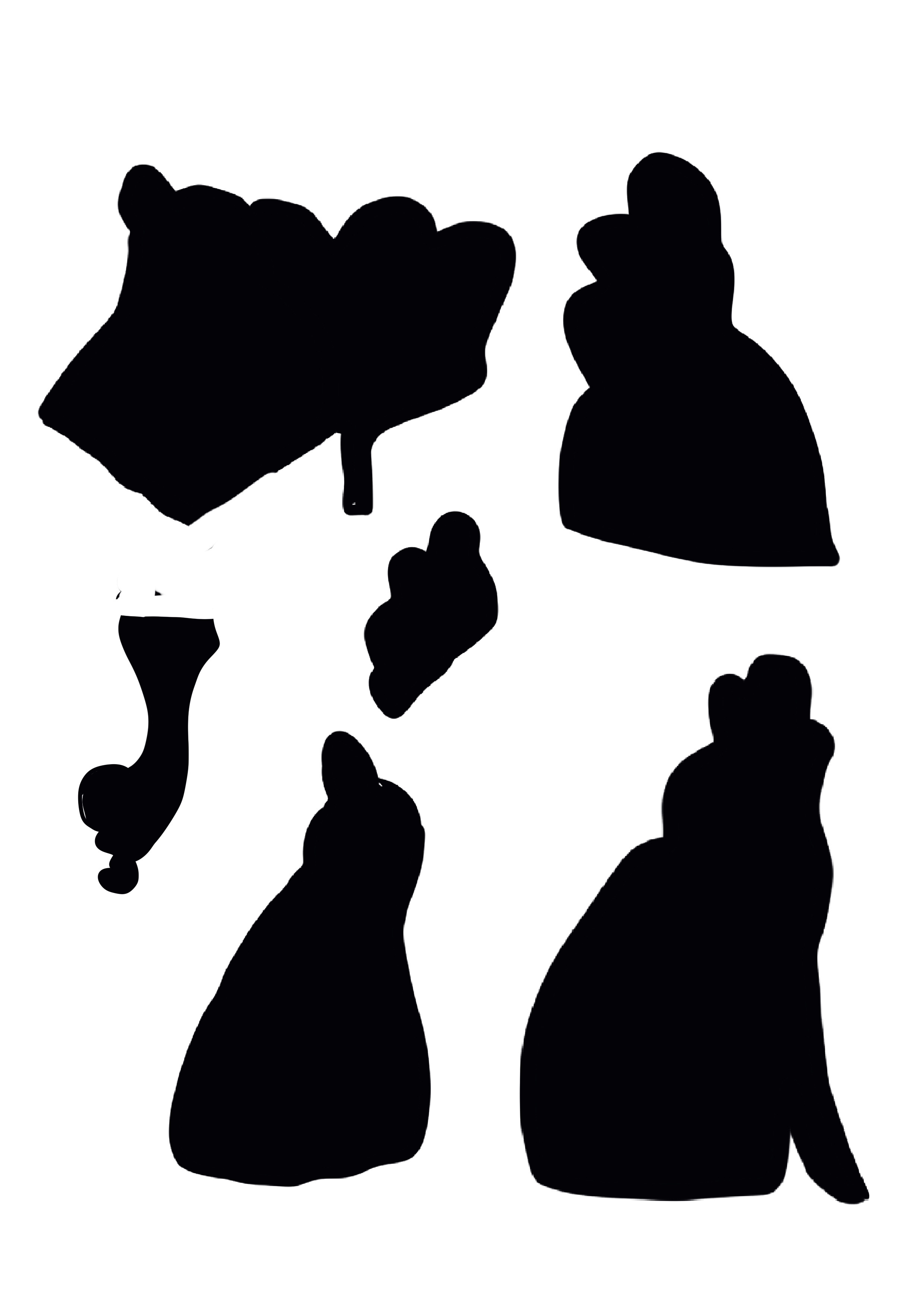
Along with the colour prompt I am including some shapes inspired by sketchbook drawings by Clarke Hall which you can download as a PDF and print out to use as you wish.

Thank you Este, I love these well put together informations/inspirations.
For the shapes download I changed the filename to W11 because there was already a W10 in my folder :-).