

Discovering Sara Lipska in Poitiers
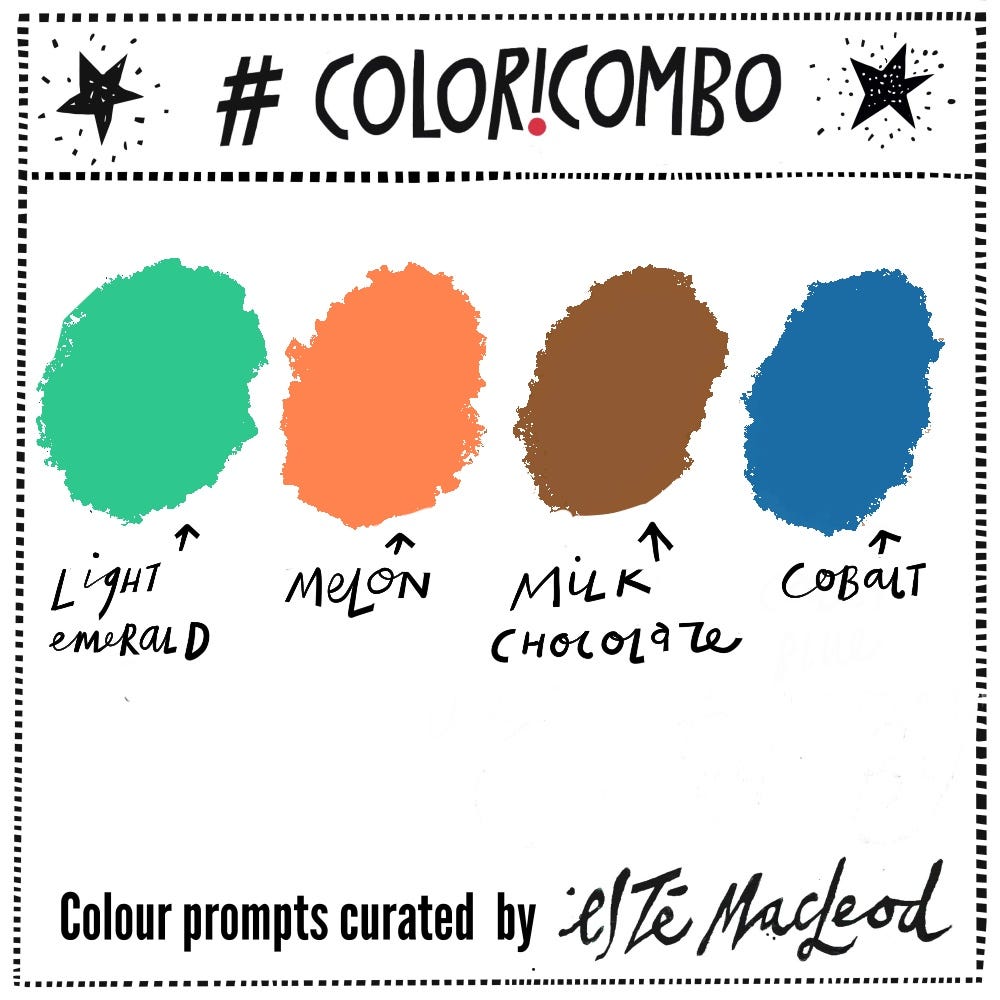
Week Twenty Five is Light Emerald, Melon, Milk Chocolate & Cobalt
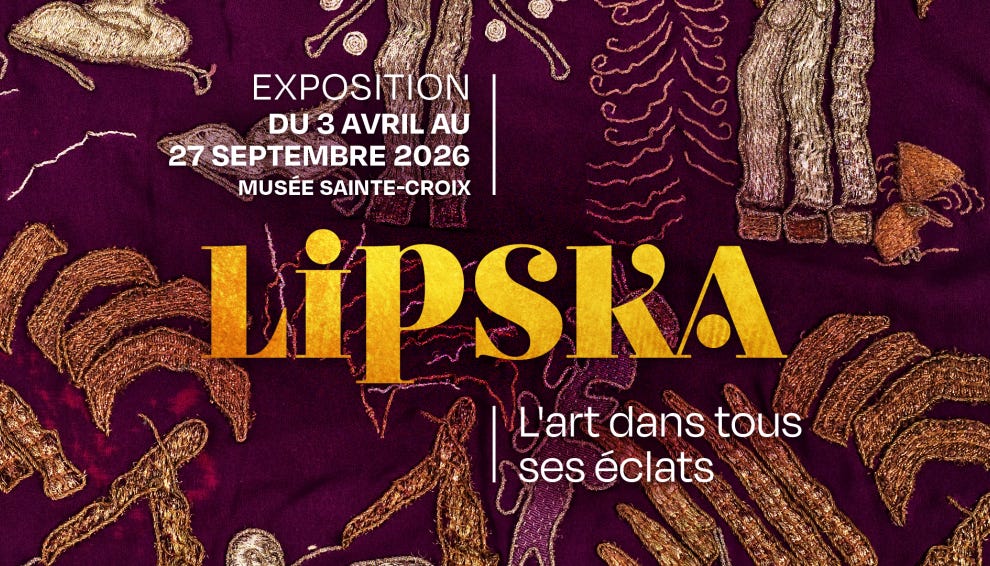
On our drive from England to the Dordogne in France we stayed overnight in two cities: I mentioned Rouen two weeks ago, the other one is Poitiers, a city that has been in existence since pre-Roman times. By chance I saw posters advertising a retrospective exhibition for Sara Lipska at the city’s Musée Sainte Croix and had to pop in before we continued on our travels, to find out more about this relatively unknown sculptor, painter and designer from the early 20th century.
Before I talk about Lipska, a brief tribute to the extraordinary artist David Hockney who died on 12 June at the age of 88, it was his funeral this last week. He was groundbreaking with an iconic style, irreverent and ever evolving. Hockney accomplished so much in his lifetime and lived in France for a number of years later in his life, apparently so that he could smoke at restaurants!

Hockney was featured previously on Coloricombo back in 2024. Read about his achievements in his obituary from The Guardian.
Lipska (1882–1973) was born in Mlawa, Poland in 1882 into a wealthy Hassidic Jewish family. In 1904 she was one of the first female students admitted to the Academy of Fine Arts in Warsaw. She studied sculpture under Xawery Dunikowski and became his muse, partner and collaborator. In 1912 Lipska left Poland, packing her bags and relocated to Paris with their daughter (where she lived for the rest of her life).
In Paris, Lipska moved in circles with some of the most creative Slavic voices of the early twentieth century: Natalia Goncharova, Sergei Diaghilev and Tamara de Lempicka. In 1919 she began designing sets and costumes for Diaghilev’s Ballets Russes. Her designs featured bold colours and simplified patterns inspired by Cubist and Fauvist art and it was through costume design that she started combining textiles and embroidery, fusing together Futurism, the angular shapes of Cubism and the clean modernism of Art Deco.
By the 1920s, Lipska had become a renowned fashion designer, opening boutiques on the Champs Elysées in Paris and in Monte Carlo. She also worked as a sculptor, painter and interior designer, creating numerous busts including those of Diaghilev, Paul Poiret and Arthur Rubinstein and moved between these disciplines with equal mastery.
Despite all this success, Lipska remains an enigmatic figure. Extant examples of her work are rare and pieces bearing her label or signature are uncommon. If you look hard you can find her work scattered across museums like the Met, Centre Pompidou or the Smithsonian but she’s been largely overlooked in art history.
I am so glad I discovered this artist who wasn’t confined to one discipline, one medium or one identity. She moved fluidly between fine art and design, between sculpture and fashion and between the gallery and the boutique.
She fits perfectly into the definition of an overlooked female artist and it is wonderful that her daughter has bestowed so many of her works to the museum in Poitiers. Read more on their website here. There’s a great article on Culture.pl that shows some amazing examples of her varied ouvre here.
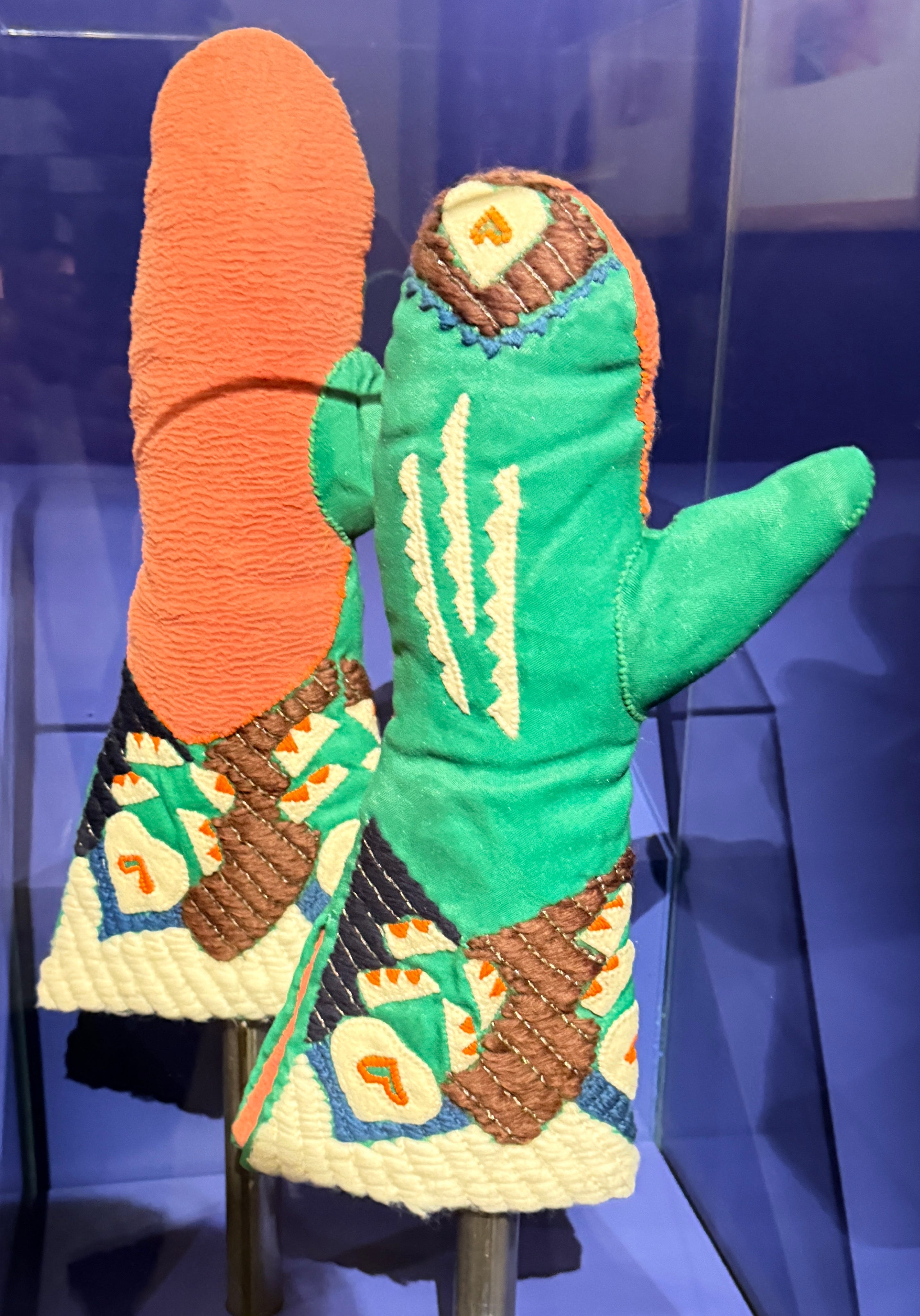
“Mittens”, silk and wool with embroidery, Sara Lipska, ~1920-1930’s
Colour Combination
The colours this week are picked from embroidered mittens I saw at the exhibition Light Emerald, Melon, Milk Chocolate & Cobalt. Use them along with a contrasting dark and neutral light colour to create an artwork in any medium or style. If you know someone who might enjoy a weekly dollop of colour and creativity please share this post with them.
Shapes
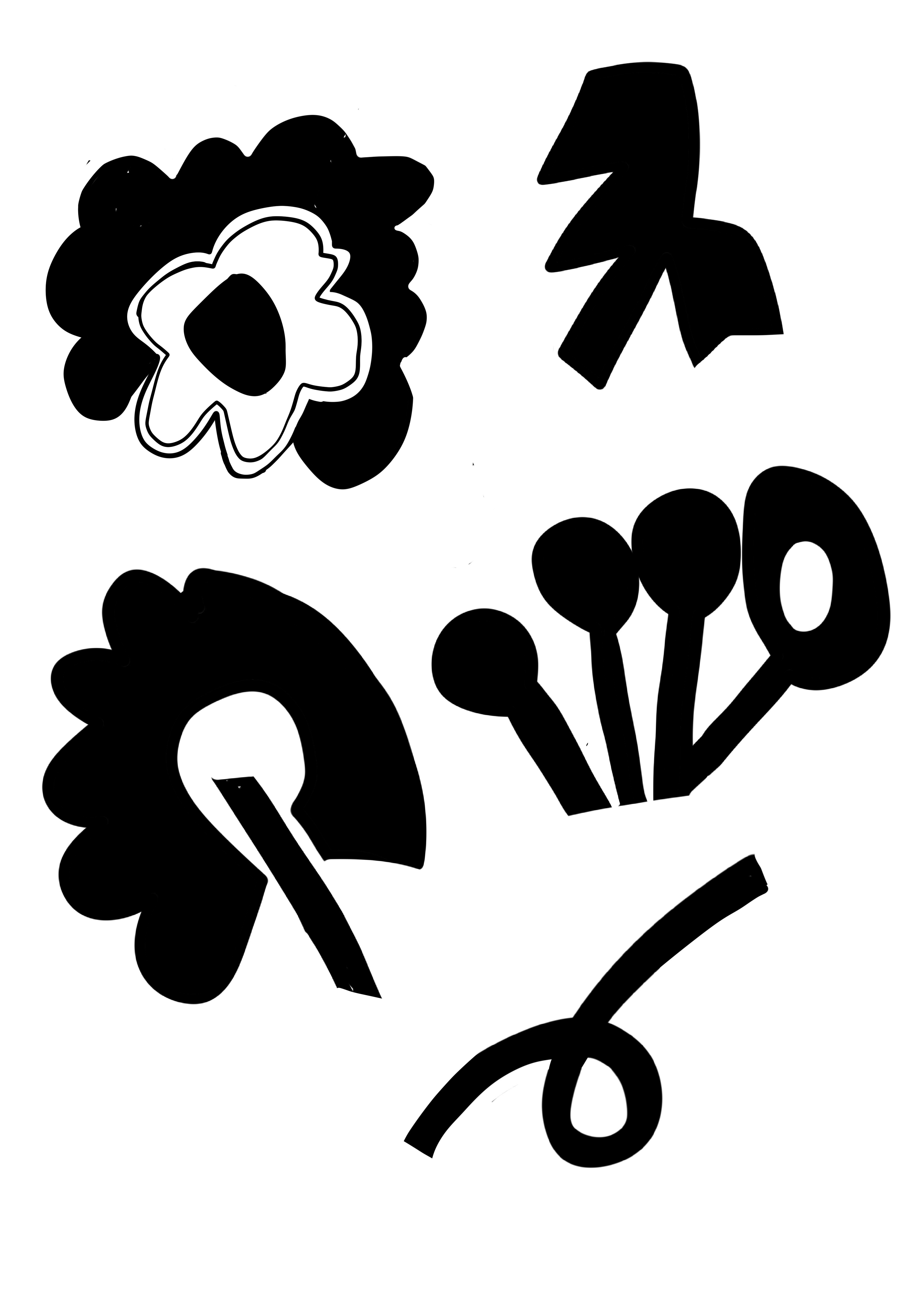
Along with the colour prompt I am including some shapes inspired by another embroidery of Lipska’s featuring stylised florals, you can download as a PDF and print out to use as you wish
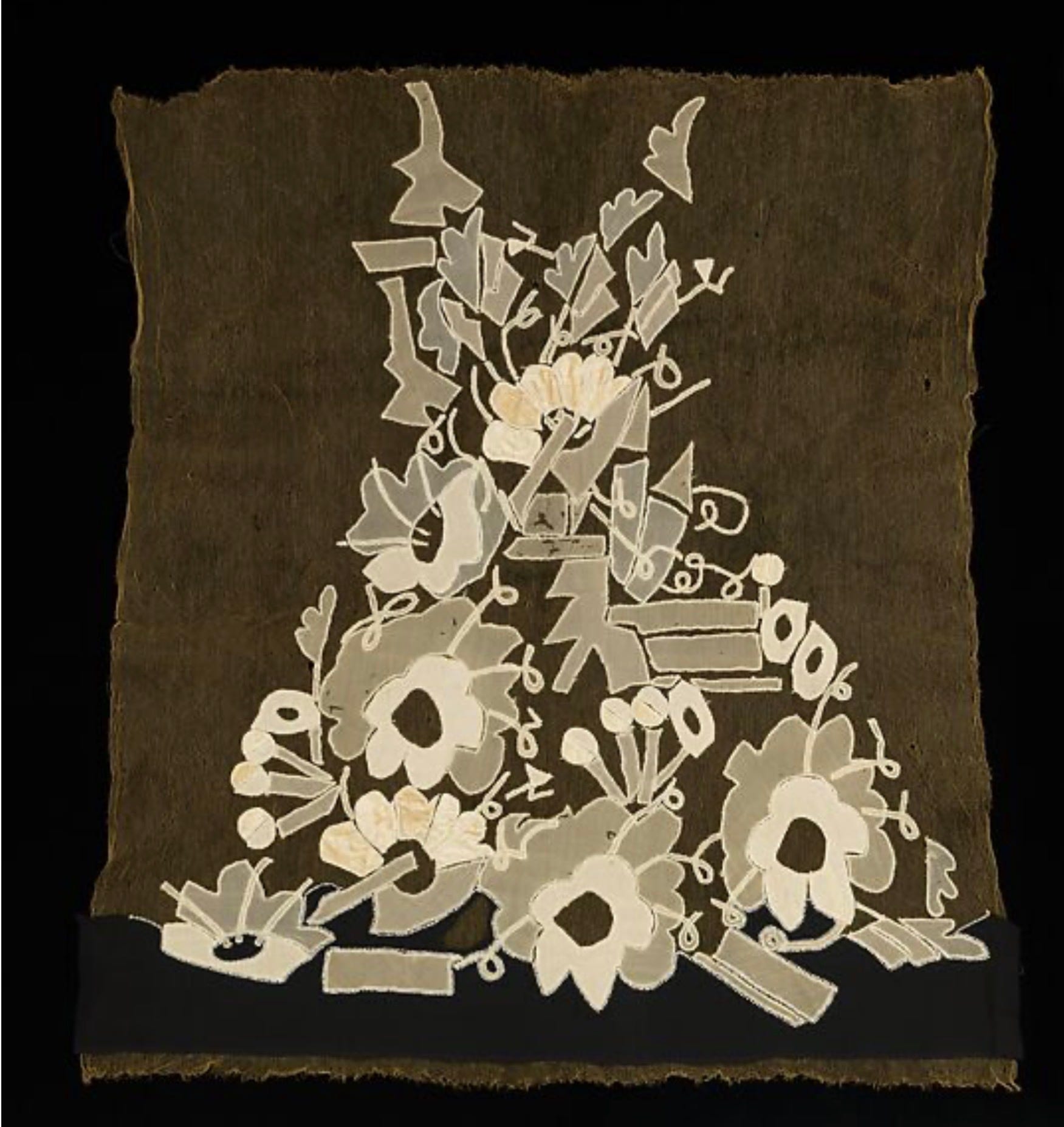
“Habit à la disposition”, embroidery, Sara Lipska, ~1920-1929 (Source)

Thank you for the prompt today. 🌼 May I ask which specific colours you would use?
Would the green be a mixture of sap green and turquoise for example?