

'Everything changes. even stone.'
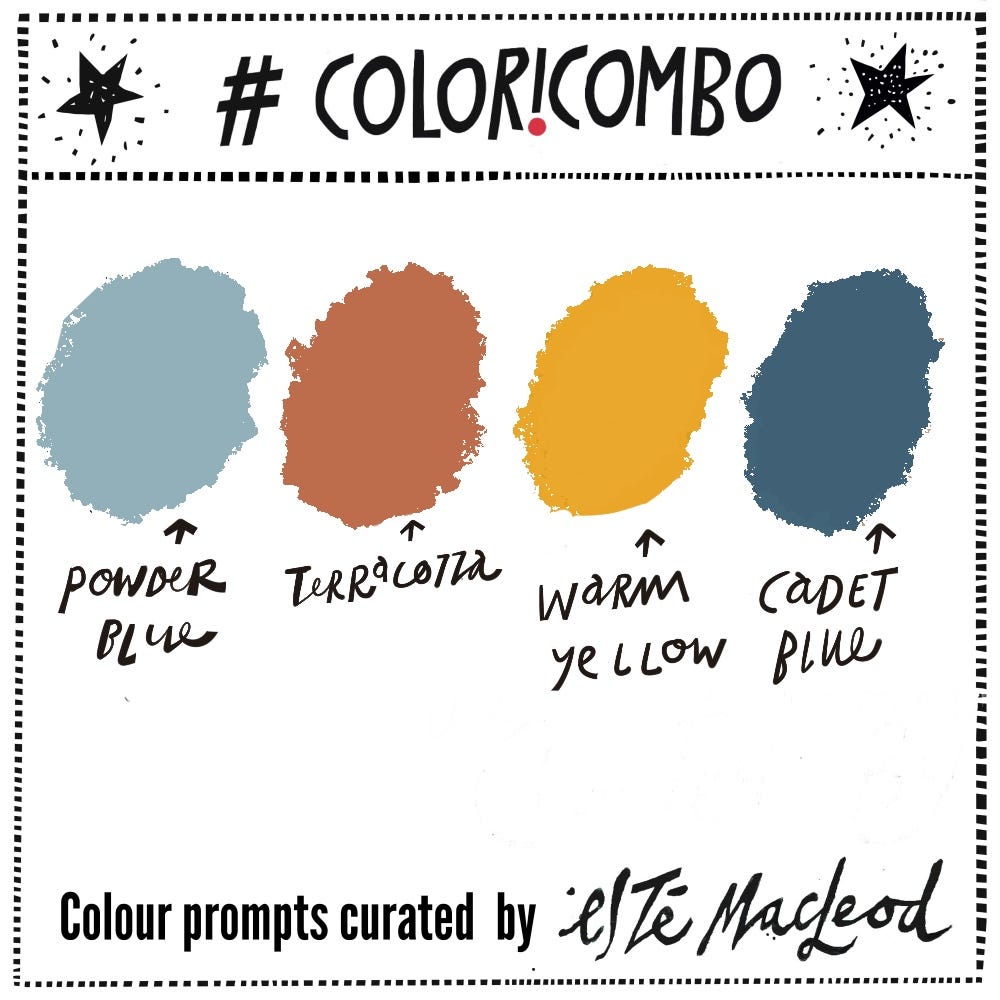
Week Twenty Three is Powder Blue, Terracotta, Warm Yellow & Cadet Blue
After a busy May we packed the car with everything we’ll need for an early summer working break including art materials, paints and canvases, loaded our two dogs and drove to the Dordogne region of France. The trip was split over a few days and on the way we overnighted in Rouen, on the banks of the Seine, and Poitiers further south.
On our first stop we enjoyed walking around Rouen with it’s links to the Vikings and Joan of Arc. We visited the Cathédral Notre-Dame de Rouen famous for it’s three towers, each completed in a different style over a period of eight hundred years. With foundations dating from 1030 and a spire reaching 151m (495ft) it was briefly the tallest building in the world.
The interior of the cathedral is vast and impressive and I was struck by the beautifully crafted 15th century stone staircase that leads to the library. I also noticed something unusual: flint nodules that are present in the carved pillars and some building stones. These are Caumont stone, a Cretaceous chalk stone that naturally contains these flint ‘kidneys’.
On one interior wall you can see medieval graffiti, depictions of ships carved roughly in the stone. These etchings were carved by sailors and maritime pilgrims visiting the cathedral to pray for safe journeys as historically Rouen was one of France’s most important river and maritime ports.


The cathedral is also famously the subject of Claude Monet Rouen Cathedral series. Monet (1840-1926) painted these between 1892 and 1893. He rented space across from the cathedral (apparently on the second floor of a woman’s clothing store), setup a small studio and began an extraordinary experiment. Sometimes working on fourteen canvases in succession, he would work on each canvas for no more than an hour - once the light had changed beyond an acceptable limit, he would stop and wait for another day with similar conditions to continue.
He ended up with over thirty paintings that focus on the effects of light, weather and atmosphere rather than on the cathedral’s architecture. Of these, twenty eight canvases are of the western façade of the Gothic cathedral from a nearly identical angle.
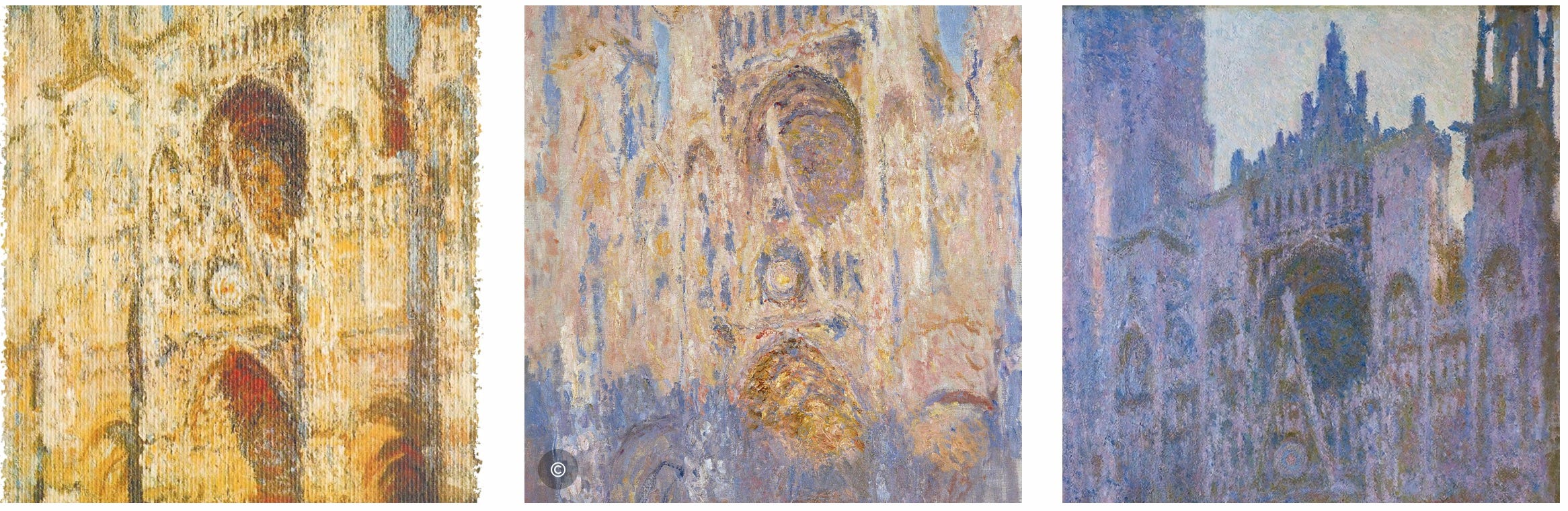
Monet wrote ‘Everything changes, even stone’ and he demonstrated that the same subject is never actually ‘the same’. The cathedral’s intricate façade is solid, monochromatic stone, but looking at the canvases you can see mauves and greens, pinks and oranges. He was painting colours not the architecture and was documenting what light does and how it transforms everything it touches.
In 1895, Monet exhibited twenty of these cathedral paintings at Galerie Durand-Ruel in Paris, inviting viewers to stand before them as a complete experience, and not as individual paintings. The display was a massive critical success, drawing praise from fellow masters like Camille Pissarro and Paul Cézanne.
Remarkably, Monet never actually went inside the cathedral until after he had completed all his paintings - the interior wasn’t really of interest to him!
Read more about Monet and his series here and watch a short video by Sarah Sze for Musée d’Orsay here. I’ve included more about the cathedral itself here and information from the city’s tourist office here.
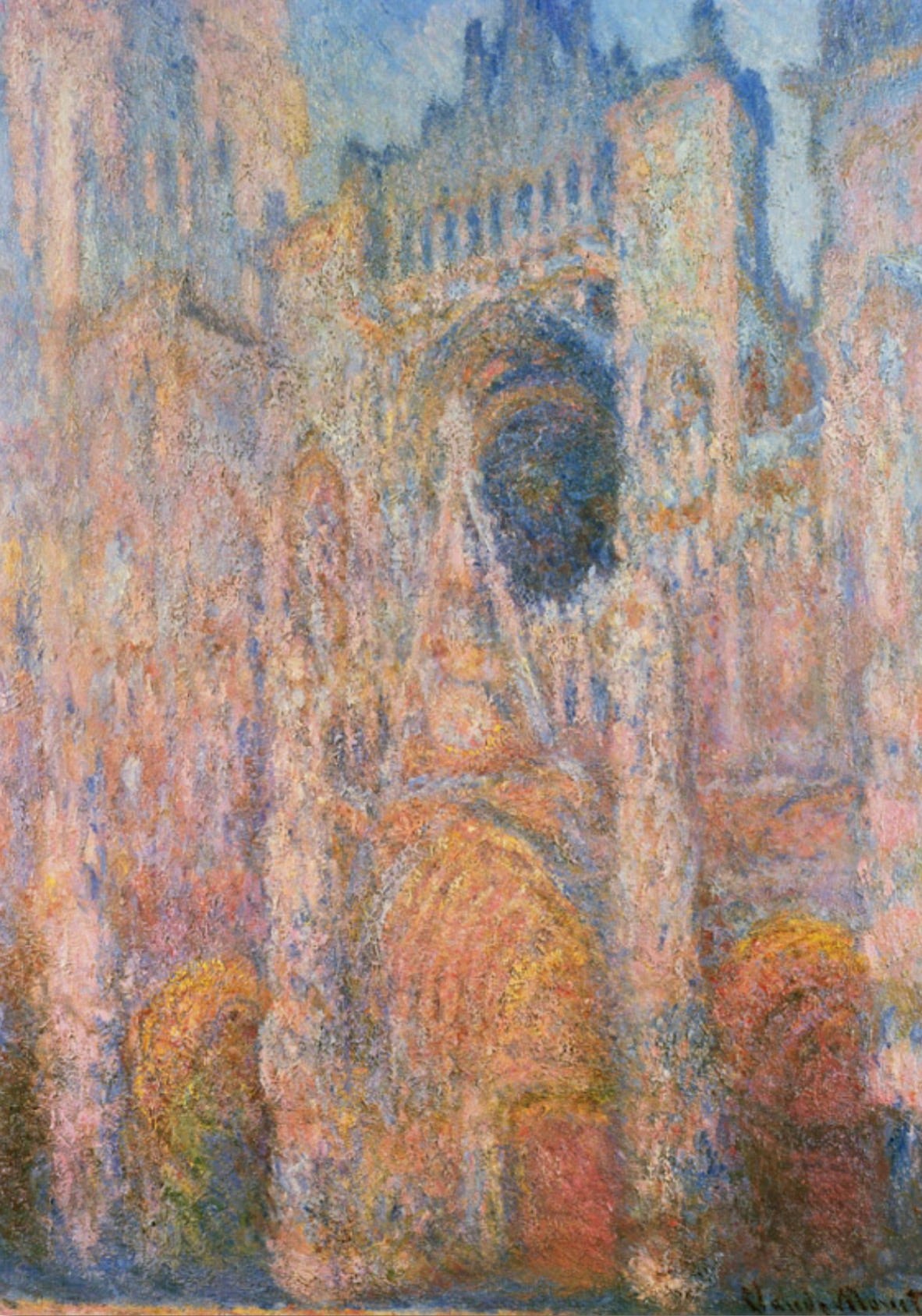
“Rouen Cathedral, West Façade, Setting Sun”, oil on canvas, Claude Monet, 1892
Colour Combination
The colours this week are Powder Blue, Terracotta, Warm Yellow & Cadet Blue. Use them along with a contrasting dark and neutral light colour to create an artwork in any medium or style. Know someone who might enjoy a weekly dollop of colour and creativity? Why not share this post with them?
Shapes
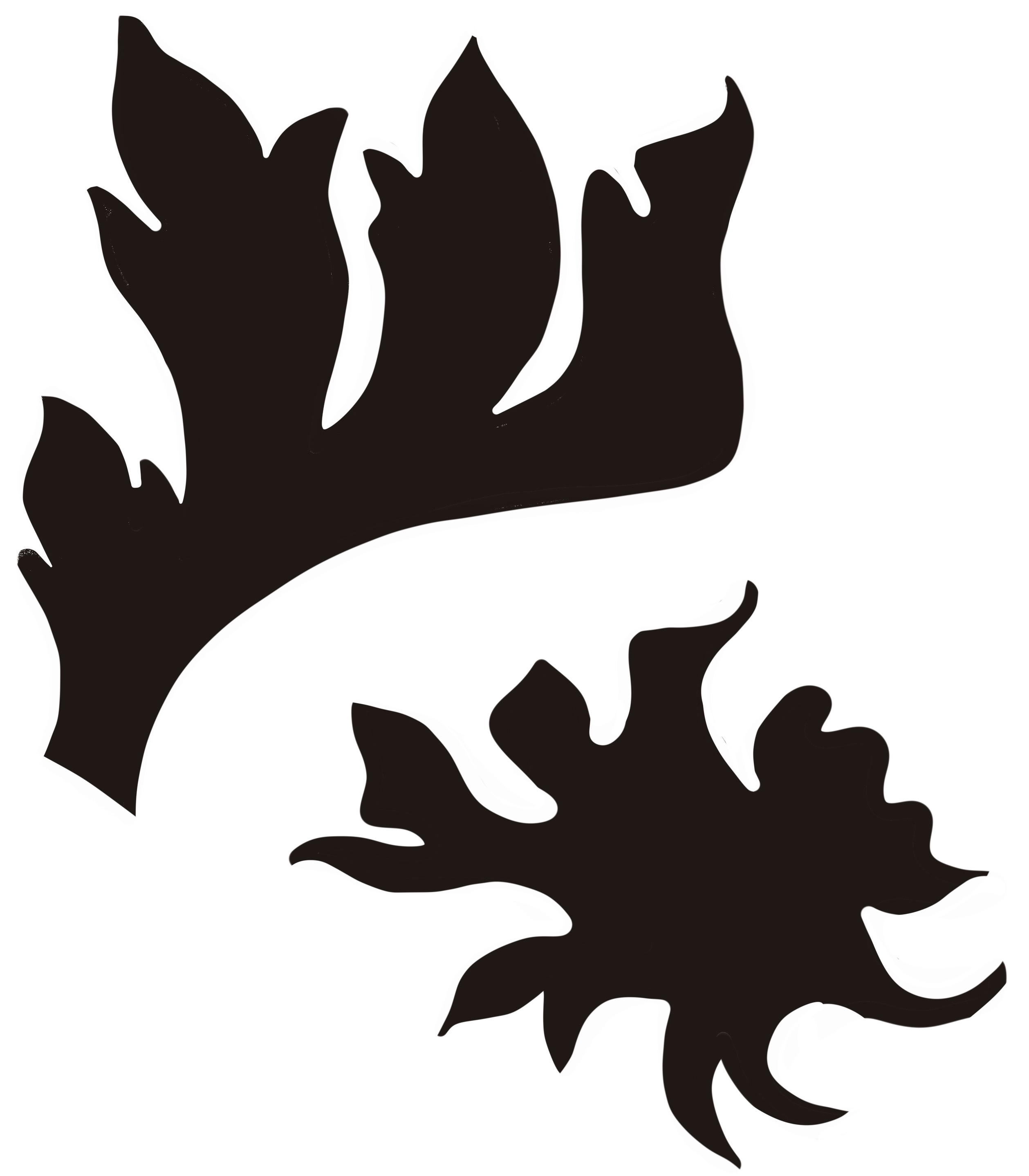
Along with the colour prompt I am including some shapes inspired by the artwork which you can download as a PDF and print out to use as you wish. These are based on motifs seen around the cathedral.

This is amazing - 28 canvases of a single subject, moving around and capturing the light and nuances! Sometimes I wonder why the classic masters are set apart when I see contemporary artists who are also amazing, and then I hear a story like this! Oh, to have the artistic curiosity, time, ability, and energy to think of and then follow through on something like that! Thank you for sharing this. Definitely on my list of things to explore more. I also appreciate the way you always put more links at the end to help us continue to pursue the idea on our own. My brain feels like it’s going to explode!!