From a street sign to poetry
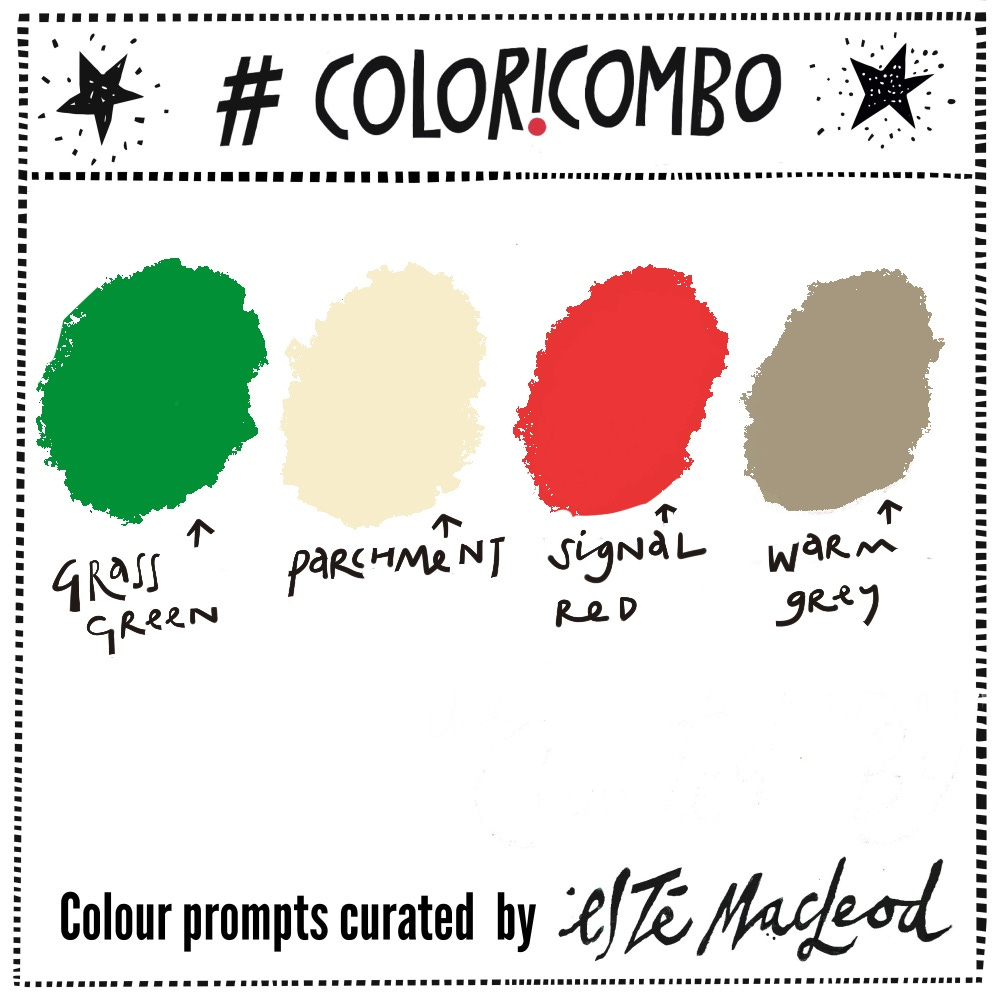
Week Sixteen is Grass Green, Parchment, Signal Red and Warm Grey
Hello from the hilltop village of Montelparo in Italy where I’m teaching on a retreat. Inspiration often comes from some unlikely sources and this week it’s from a street sign in a nearby town, the Via Giocomo Leopardi.
Before I tell you about Leopardi, I need to share that the lineup for the second Colori Flori Summit, which takes place from 18-31 May, has been announced. The focus once again is botanicals and florals and each of the fourteen participating artists uses a limited palette chosen from Coloricombo. Find out more here.
Giacomo Leopardi (1798-1837) was an Italian poet, writer and thinker who was born and raised in the small provincial town of Recanati. He was a gifted child, a prodigy who was tutored privately and spent most of his time in his father’s extensive library. Immersed in classical and philological knowledge, by age sixteen he had mastered Greek and Latin, translated Homer and had written enough to impress actual scholars. His physical health was poor though: a spinal condition caused chronic pain and his eyesight deteriorated, eventually causing blindness in one eye.
In 1816 something changed and Leopardi stopped doing scholarly work completely and started writing poetry - he phrased it as the passage from erudition to the beautiful. He started with poetry deeply influenced by classical forms before developing the style he’d become known for: lyrical poetry exploring nature, memory, childhood and unrequited love. L’infinito written in 1819 describes his yearning to travel beyond the confines of Recanati and to experience more of the world which he had studied.
He published his first collection of poetry, the Canzoni, in 1824, followed by a the Canti in 1831. While both were well received, they weren’t particularly successful and Leopardi struggled financially. He had left Recanati only to drift around Rome and Florence looking for opportunities that never quite worked. He died in Naples in 1837 during a cholerea outbreak, still with a modest reputation.
After his death that changed. His works were ‘rediscovered’ and and ranked alongside those of Keats and Wordsworth. Leopardi is now considered the greatest Italian poets of the 19th century and one of the major figures of European Romanticism.
It’s fantastic what you can learn from a street sign! If you’d like to read more about Leopardi’s life and legacy click here or here.
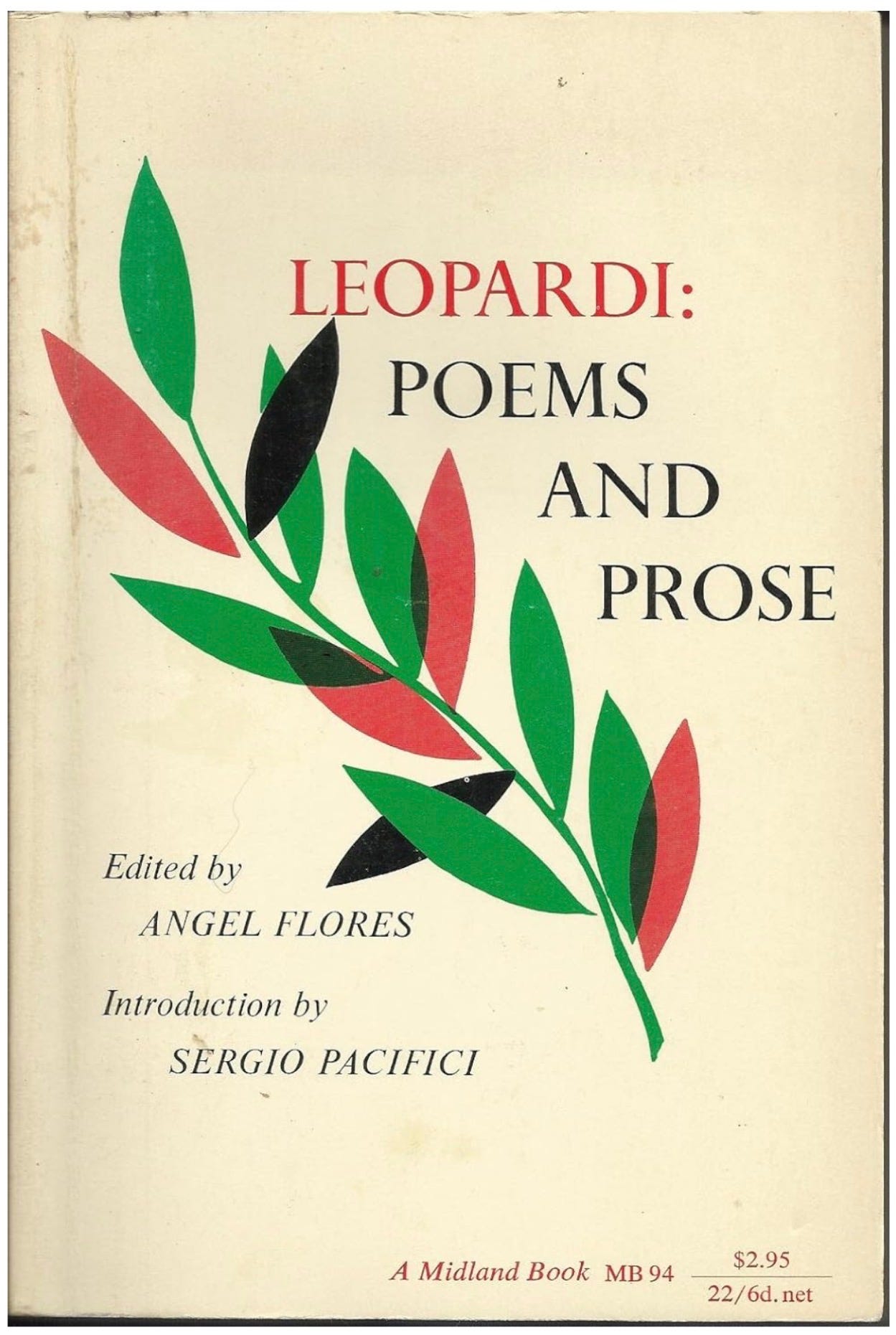
“Leopardi: Poems & Prose”, book cover, 1966.
Colour Combination
Colours this week were taken from a book cover and are Grass Green, Parchment, Signal Red and Warm Grey. Use them along with a contrasting dark and neutral light colour to create an artwork in any medium or style. Know someone who might enjoy a weekly dollop of colour and creativity? Why not share this post with them?
Shapes
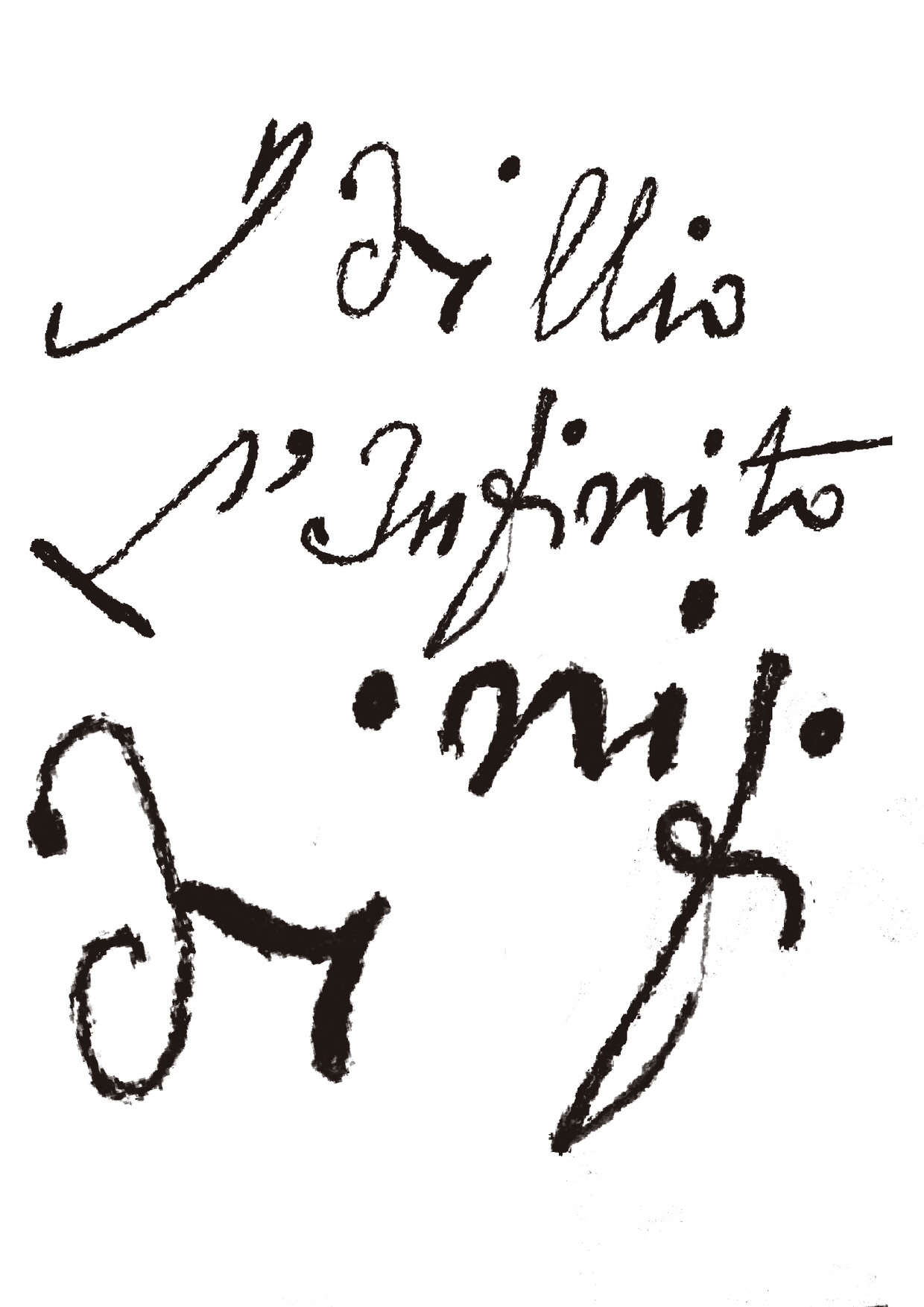
Along with the colour prompt I am including some shapes inspired by Leopardi’s original handwriting of L'infinito.