

This week’s Coloricombo prompt is coming to you from Birmingham, England where I am exhibiting designs and repeat patterns at the Licensing Lab of the Springfair 2026. This is also the place where I’m launching my brand new wallpaper collection, manufactured in England and available on rolls online.
Week Five’s prompt is inspired by a company with a history of over 150 years. During the late 18th and 19th centuries, Birmingham was known as the workshop of the world and was a leading city of the Industrial Revolution. It was renowned for diverse, small-scale workshop production especially in metalwork which included jewellery, buttons, toys, pens and guns.
Birmingham was also the home of Joseph Hudson and his company J Hudson & Co, which became the worlds largest whistle manufacturer, and they still are.
Whistles themselves have been around for thousands of years with the oldest known one held in the amazing Pitt Rivers Museum in Oxford, 10,000 years old and made from bone.
Whistles have been used by the Greeks to keep slaves rowing their galleys in stroke and by the English during the Crusades to signal orders to archers. They’ve been made from whatever was to hand: bone, wood, shells and gourds.
How Hudson invented the modern whistle was a combination of poor grip and a police contract. The story goes that he managed to drop the violin he was playing, producing a dissonant sound that just couldn’t be ignored. He tried to replicate the sound, one that would pierce through the noise of a Victorian street and came up the whistle eventually adopted by the Metropolitan Police in 1883. The following year he invented the Acme Thunderer, the first pea whistle, by adding a small cork ball to the whistle chamber. This became the world’s best selling whistle, with total production to date of over one billion.
Have a look at the Acme website here (we use their whistles most days to recall our dogs on walks) and find out about the history of the Acme Thunderer here, including it’s use on the Titanic. You can read about J. Hudson & Co. here and listen to a quick podcast about iconic designs here.
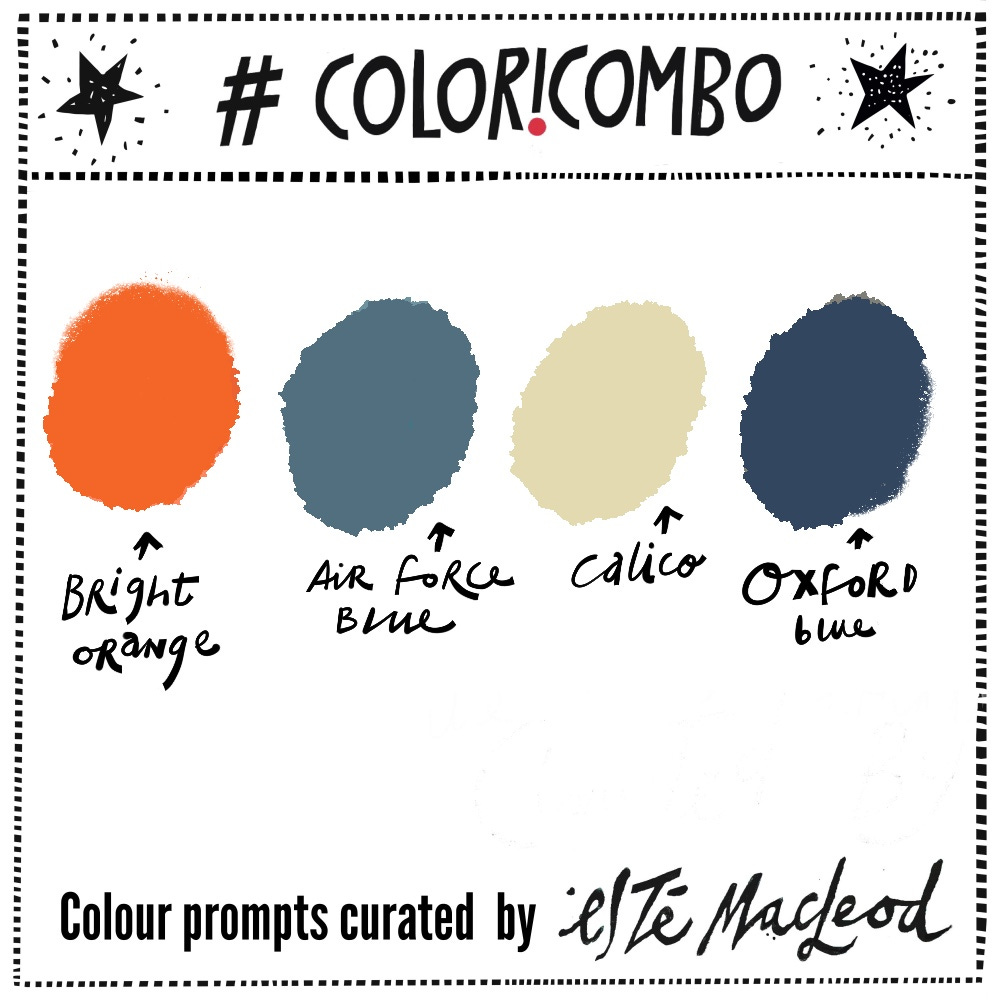
The Coloricombo colours are sourced from a trade mark certificate for the Acme Siren, issued in 1917.
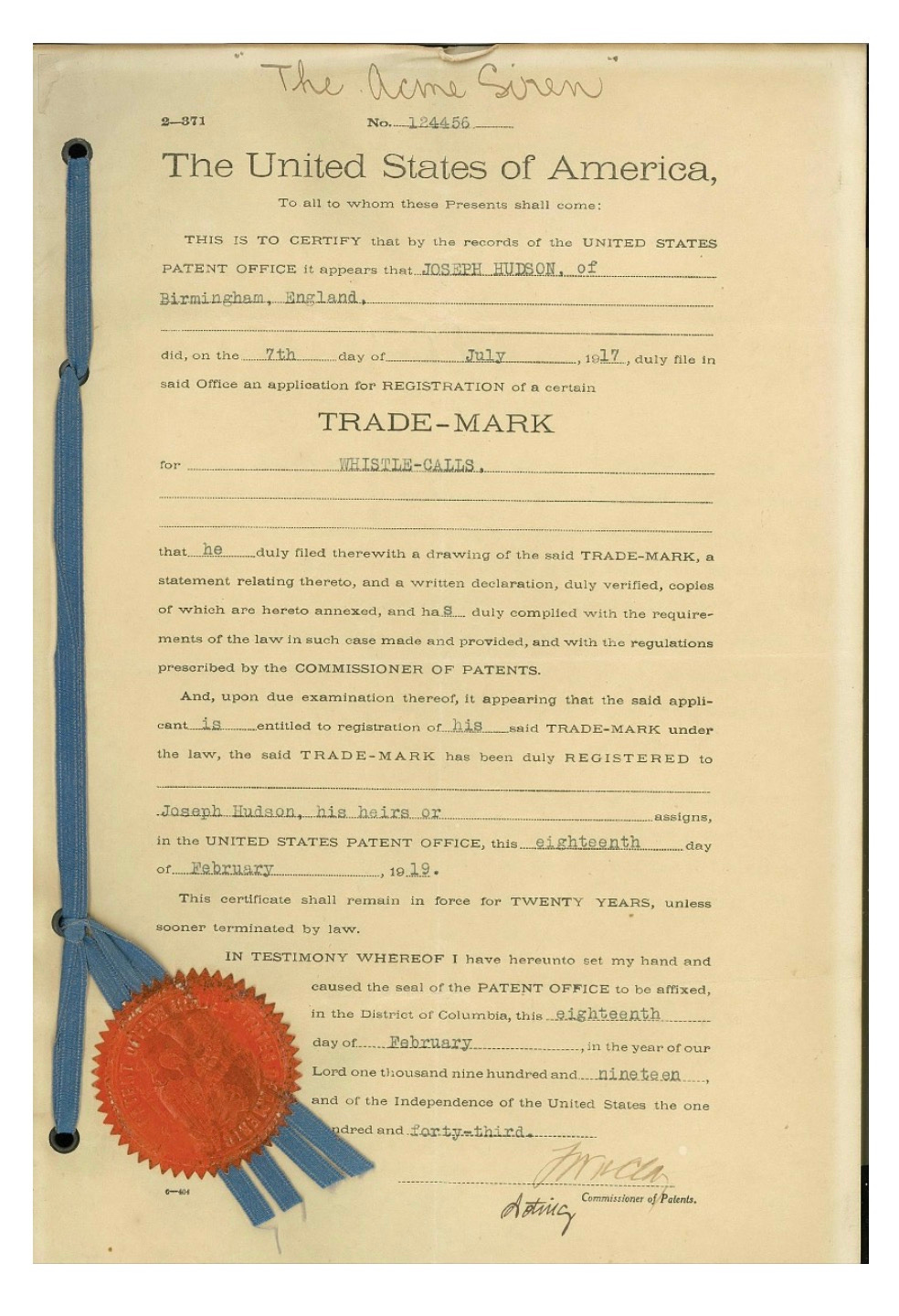
“United States Trademark Certificate”, paper, wax and ribbon, from Acme Whistles website, 1917
Colour Combination
The colours this week are Bright Orange, Air Force Blue, Calico & Oxford Blue. Use them along with a contrasting dark and neutral light colour to create an artwork in any medium or style. Share this post with someone who might enjoy a weekly dollop of colour and creativity.
Shapes
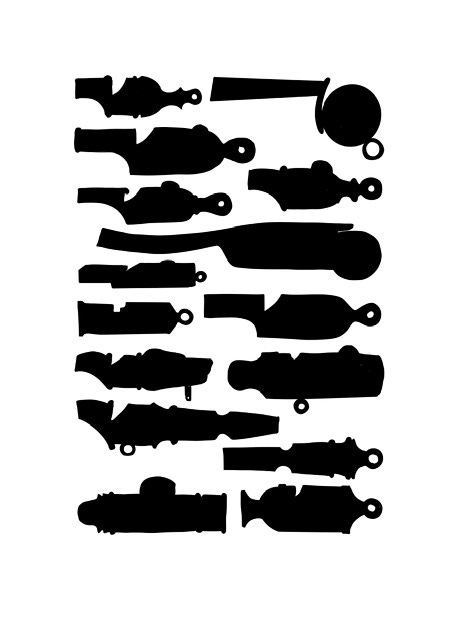
This week’s shapes are sourced from Popular Science Montly, Volume 33 published in 1888.
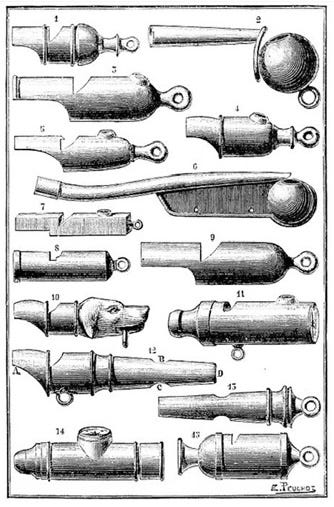
Taking the outline I noticed how they appear like comical head profiles, reminding me a little of John Tenniel’s engraved illustration for Alice in Wonderland.


I couldn’t resist adding white dots to represent eyes!
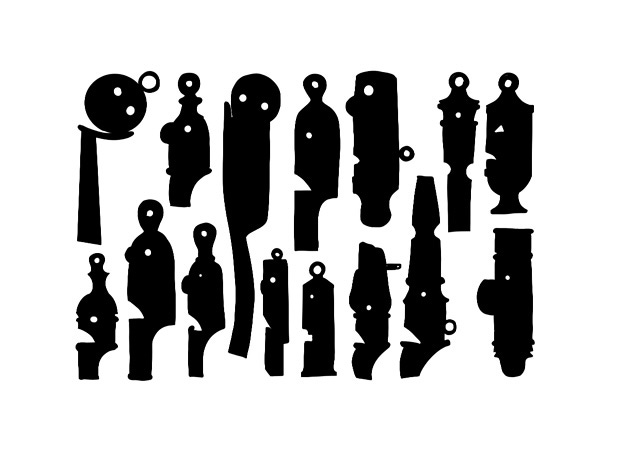
Download the shapes as a PDF below and use it as you choose, maybe as background elements or cut the shapes out and rearrange them. I love seeing what you create and post in the Facebook Group. Keep them coming.

Thanks Este, it’s right on point. I’ll be whistling while I work to drown out the clanging of our current “leadership”. There are many silent, rusty, broken bells and whistles that need to sound but don’t. Does ACME offer integrity repairs? Best to you at the show and congrats and much success with your fabrics and wallpapers.
Wow, aren't they interesting and elegant shapes! I love the faces! Very tempted to play with some character designs based on them!
Congratulations with your new fabrics and wallpapers, they are absolutely stunning - I've warned my husband that I want one as a feature wall when we move house!