Erasers at the ready! There’s a free three day mini-course coming up next month called Play with Print where simple tools including tiny ink pads and erasers will be put to good use. Come and explore fun ways to print interesting vessel forms over the weekend of 11-13 September.
This mini-course is a prelude to the deep dive, three-week long Print, Paint & Pattern course that runs from Monday 14 September to Sunday 4 October.
You can get more information about both Play with Print and Print, Pattern, Play here.
This week’s Coloricombo is based on something that’ll be used in an unconventional and fun way during Play with Print: an eraser.
They say that every artist has a relationship with their eraser. Mine could probably be described as distrust - I don’t like using them. Ever. They make you want to get rid of imperfections, but if something hasn’t quite turned out the way it was planned, I’d prefer to embrace it rather than erase it.
Anyway, I was wondering about the origin of erasers and this caused me to go down a metaphorical rabbit hole where I found all sort of fascinating trivia, some stranger than you’d expect.
For roughly two hundred years after graphite pencils first appeared in 1565, there weren’t any erasers as we know them. To lift off pencil or charcoal marks, people used bread. If you want to try this yourself, cut of any crust then knead and roll the soft middle bit into a ball. Dampen if necessary then roll or run the bread gently over your offending marks, not forgetting to brush off any loose crumbs.
Fortunately in 1770, a British instrument-maker named Edward Nairne tried using a piece of natural rubber and, noticing it did a much better job than bread, started marketing small rubber cubes.
The chemist Joseph Priestley, more famous for discovering oxygen (or as he snappily named it dephlogisticated air) gave the material it’s English name, which described how well it could rub out pencil. Hence why erasers are still known as rubbers in certain parts of the world.
There was a problem with early erasers: they rotted. It took until 1839 when Charles Goodyear worked out the process of vulcanisation that erasers became something you could actually keep in a pencil case. From that point onwards, the format diversified: kneaded putty rubbers, harder blocks for ink and pencil and pink rubbers with added pumice stone that were sold extensively to schools in the 1930s.
The logical combination of a pencil and an eraser was patented in 1858 by Hymen Lipman of Philadelphia. However the patent was later invalidated as sticking two existing things together wasn’t considered inventive enough to warrant protection. Nevertheless the design has become fairly ubiquitous, although some manufacturers persist in selling them separately. It might come down to different attitudes towards mistakes: a pencil with an eraser assumes you’re going to need it whilst a pencil without one assumes you won’t.
Read more about erasers here and here and watch a video that explains what actually happens when you erase a pencil line here.
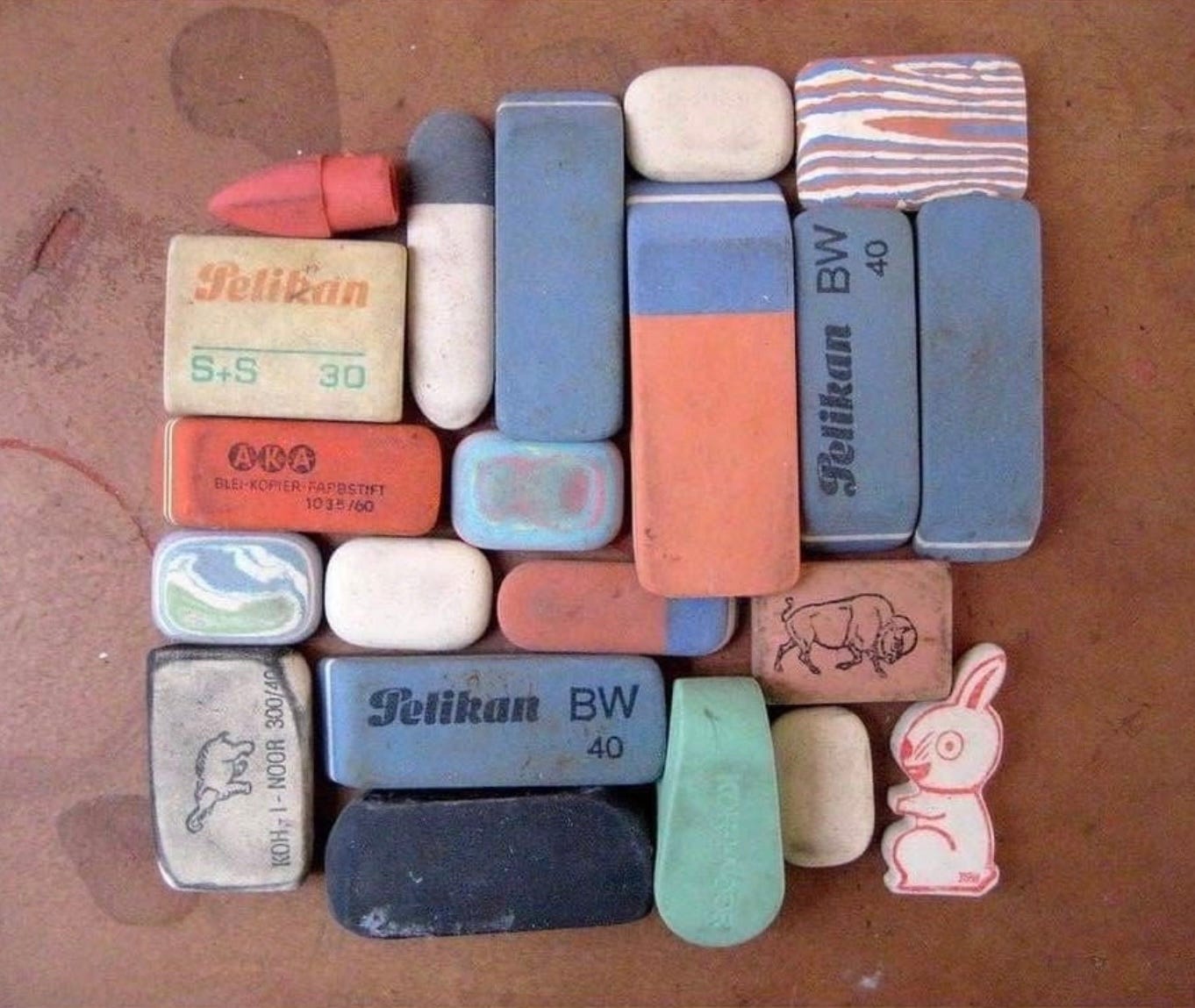
“Vintage eraser collection”, original source unknown
Colour Combination
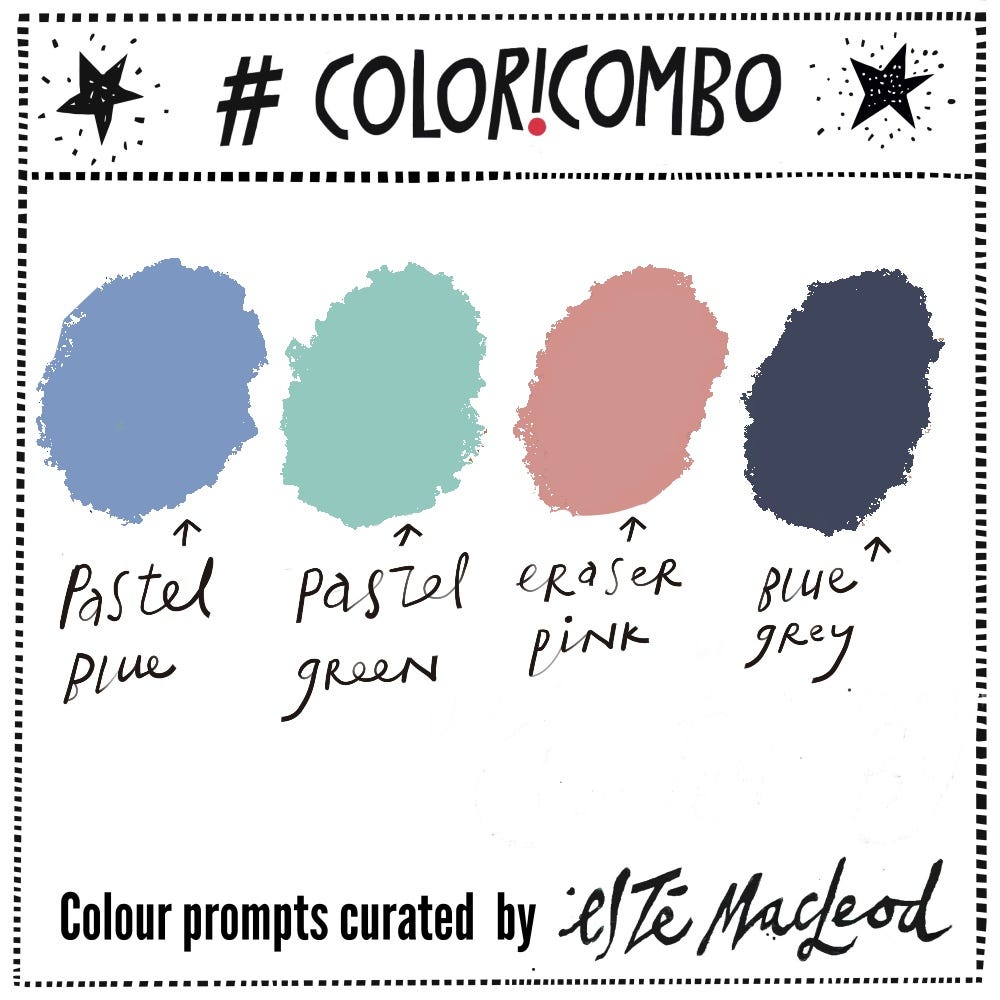
The colours this week are Pastel Blue, Pastel Green, Eraser Pink & Blue Grey. Use them along with a contrasting dark and neutral light colour to create an artwork in any medium or style. Know someone who might enjoy a weekly dollop of colour and creativity? Why not share this post with them?
Shapes
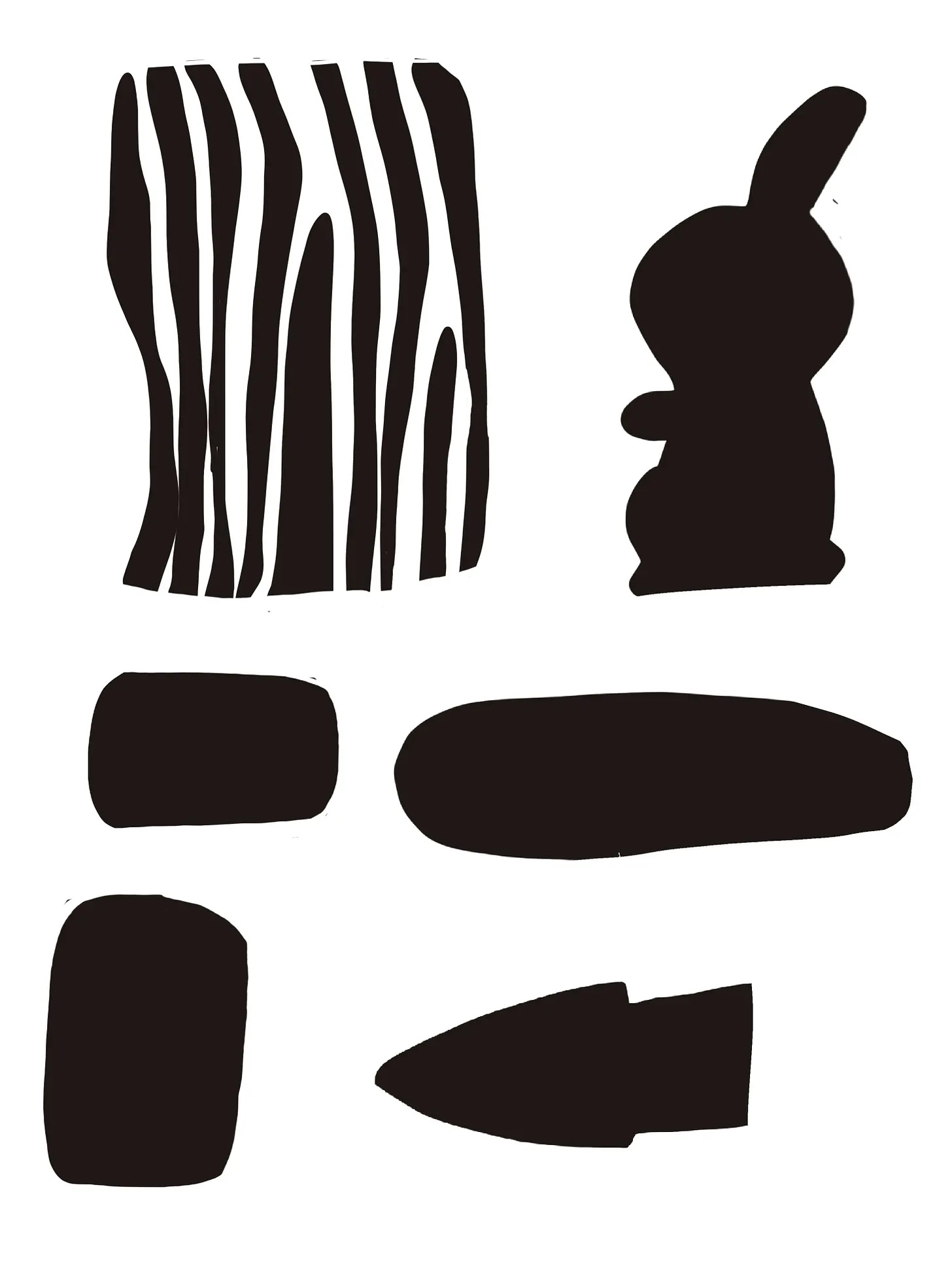
Along with the colour prompt I am including some shapes inspired by the artwork which you can download as a PDF and print out to use as you wish